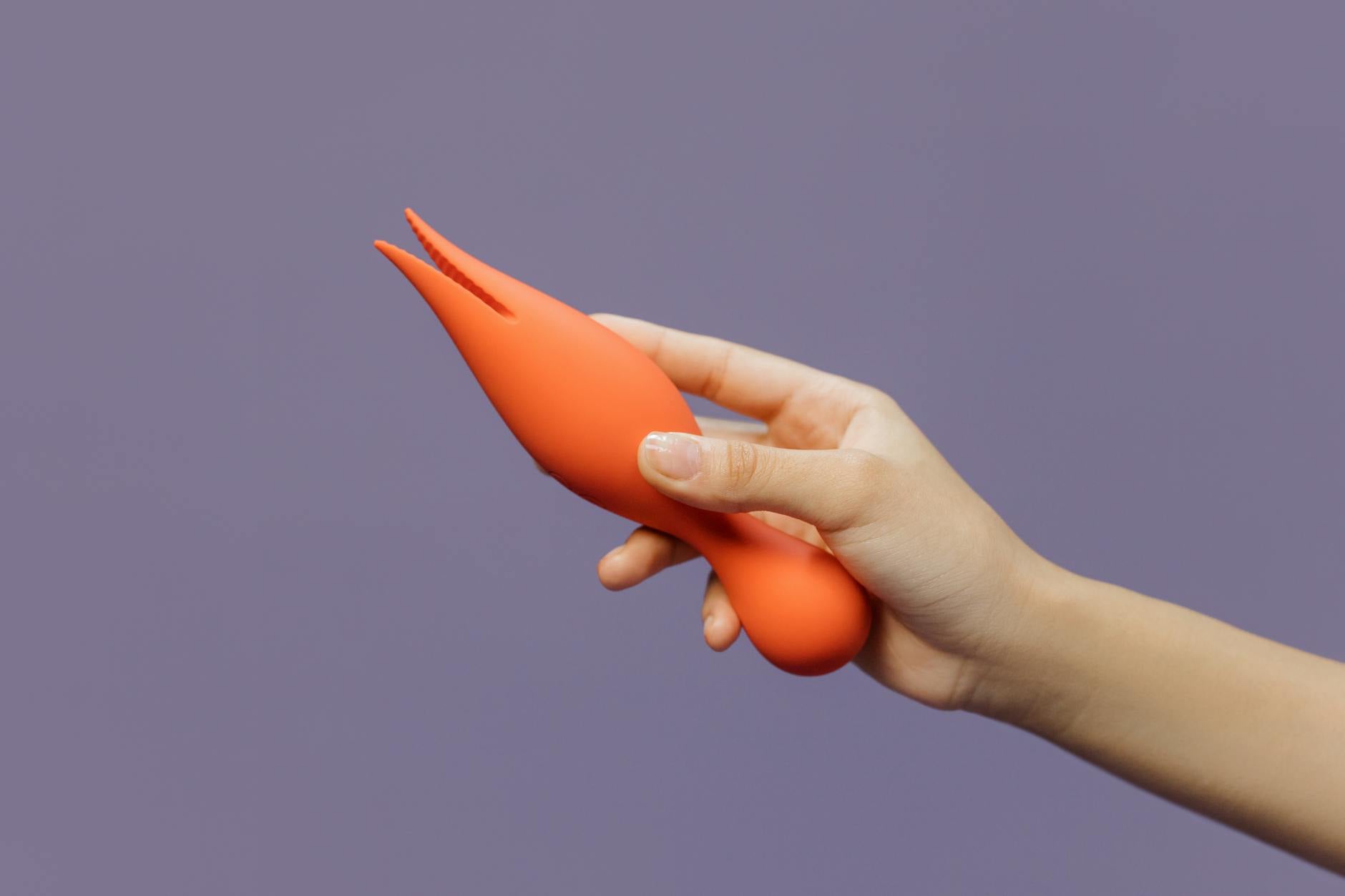
Let's talk about sensitive tissue
Sensitivity isn't fragility. But the language we use matters. When your clitoris feels tender, when your skin reacts easily, or when intensity that used to feel fine now feels like too much, the reflex is to assume something is wrong with you. It isn't. Your body is just telling you it needs something different right now.
That's exactly what lemon vibrators are designed for. The suction-based approach of a lemon clitoral vibrator works differently than traditional vibration because it stimulates rather than pounds. But even suction can be too much if you're not calibrating it correctly for your current tissue state.
Why sensitive tissue needs a different strategy
Clitoral sensitivity changes. It shifts with your cycle, with stress levels, with medications, with age, with inflammation, and sometimes for reasons nobody fully understands yet. When tissue is tender, it usually means one of a few things is happening.
First, there might be inflammation you can't see. Stress, irritation from clothing, or inflammatory conditions like vulvodynia can make tissue hypersensitive without any visible rash or damage. Second, your nervous system might be in a heightened state. Anxiety, trauma, or just a really stressful week can rewire how your body interprets sensation. Third, there might be dryness or thinning making the tissue itself more reactive. Hormonal shifts, medications like antihistamines, or even dehydration can thin the tissue and make direct contact feel raw.
None of these situations means you can't use a lemon vibrator. They mean you need to adjust how you're using it.
Start lower than you think you need to
Most people who use lemon vibrators start at pattern level 3 or 4. If your tissue is sensitive, pattern 1 or 2 is your friend. I know that sounds weak. It isn't. The suction sensation at the lowest setting can be plenty intense for tissue that's already on alert.
Here's the thing about starting low. It's not about toughening yourself up and working your way higher. It's about letting your tissue relax into the sensation so that pleasure can actually build. When you come in too hot, sensitive tissue tenses up defensively. That tension creates the feeling of rawness or overstimulation, which then makes you clamp down more, which makes sensation feel worse. It's a feedback loop.
Starting at pattern 1 or 2 breaks that loop. Your body relaxes because the sensation feels manageable. From there, pleasure can actually develop. Sometimes you'll want to increase the pattern halfway through. Sometimes you won't. Both are fine.
The role of lubrication when tissue is tender
This is non-negotiable. Water-based lubricant isn't optional for sensitive clitoral tissue. It creates a barrier that reduces friction and distributes pressure more evenly across the tissue.
Choose a slick, long-lasting formula. Thicker lubes break down faster, which means you end up with direct silicone-on-skin contact partway through, which defeats the purpose. Look for something that stays slippery for at least 15 to 20 minutes without needing to reapply. Hyaluronic acid formulas tend to work well for tender tissue because they hold moisture without feeling sticky.
Apply generously. More than you think you need. The goal is a cushion of slip between your body and the toy, not a thin coat.
Indirect stimulation beats direct contact
Lemon vibrators excel at this because the suction mechanism spreads sensation across the whole area rather than focusing it on one point. But you can also use positioning to dial this in further.
Try stimulating over the hood or the outer labia instead of the clitoris itself. This gives you all the sensation without the intensity. Place the vibrator against the labia on either side and let the suction work through the tissue layers. The stimulation reaches the clitoris indirectly, which often feels less raw and more pleasurable when you're dealing with sensitivity.
You can also angle the vibrator differently. Instead of placing it directly on the clitoris, try angling slightly so the edge of the cup catches the area around the clitoris rather than the most sensitive spot dead center. This distributes the sensation and lets you stay in the pleasure zone longer without overwhelm.
Warm-up time and breathing matter more than you expect
When tissue is sensitive or tender, rushing straight to the vibrator doesn't help. Your nervous system needs a little runway to switch from alert mode to receptive mode.
Spend 5 to 10 minutes with gentle touch before you even turn the lemon vibrator on. Hand stimulation, kissing, light touch. Nothing goal-oriented, just sensation. This tells your parasympathetic nervous system that this is safe, that this is pleasure, that you're not in danger. From there, introducing the vibrator feels like an expansion rather than an invasion.
Breathing matters too. When tissue is tender or you're guarded about sensation, people tend to hold their breath without realizing it. That bracing contracts the pelvic floor and increases overall tension. Slow, deliberate breathing (in through the nose for a count of 4, out through the mouth for a count of 6) literally relaxes the tissue. You'll notice the difference immediately.
Session length and recovery
With sensitive tissue, shorter sessions often feel better than longer ones. Instead of a 20-minute session, try 8 to 10 minutes with your lemon vibrator at a lower intensity. You get pleasure, satisfaction, and your tissue doesn't end up feeling overworked.
After a session, give yourself a day or two before using the vibrator again if your tissue is particularly tender. This isn't deprivation. It's recovery. Your clitoral tissue has a rich nerve network, and like any heavily innervated area, it benefits from rest between sessions when it's already inflamed or reactive.
When to see a doctor about sensitivity
If sensitivity is new, persistent, or painful (as opposed to just tender), a gynecologist trained in vulvovaginal health can rule out infections, dermatological conditions, or other issues that need actual treatment rather than just adjusted toy settings.
Conditions like vulvodynia, lichen sclerosus, or contact dermatitis need professional care. Once you've got a diagnosis and treatment plan, a lemon vibrator can absolutely fit into that plan. But starting with a professional is the move.
The patience play
Let's be real. Sensitive tissue can feel like your body is getting in the way of your pleasure. It isn't. Your body is just asking for a different approach. One that's slower, gentler, more attentive. That's not a downgrade. That's actually where the deepest pleasure lives. When you slow down enough to notice sensation instead of chasing intensity, you often find that satisfaction goes deeper and lasts longer.
Your lemon clitoral vibrator is built for this. The suction mechanism naturally encourages a slower, more explorative approach than traditional vibration does. You're not working against your sensitive tissue. You're working with it.
People also ask
Can I use a lemon vibrator if I have vulvodynia?
Vulvodynia is tricky because it's different for every person. Some people with vulvodynia find that very gentle suction at the lowest settings actually helps ease pain by increasing circulation without aggressive stimulation. Others find any vibration too much. The best move is to discuss it with a vulvovaginal health specialist first, then experiment cautiously at the absolute lowest setting if you get the green light. Never push through pain. Discomfort that eases into pleasure is different from pain that just gets worse.
How do I know if I'm using too much intensity?
Tissue that's too stimulated feels raw, tender, or numb afterward. If you finish a session and your clitoris feels sore or numb for more than a couple of hours, you went too hard. Back the intensity down next time. Pleasure should feel good during and leave you feeling satisfied and relaxed after, not sore.
Should I use numbing cream before using a lemon vibrator?
No. Numbing cream masks pain signals, which means you could cause damage without realizing it. The whole point of adjusting your technique is to use the vibrator in a way that actually feels good, not to override your body's signals. If you need numbing cream, the intensity or approach needs to change, not your sensation.
What's the difference between tender and numb?
Tender tissue is hypersensitive. It reacts strongly to sensation and can feel overwhelming. Numb tissue doesn't register sensation at all, or registers it from very far away. Tender tissue usually responds well to lower intensity and longer warm-up. Numb tissue often needs consistent, sustained stimulation at a slightly higher level (but still not aggressive). They're opposite problems with different solutions.
Can medications affect how sensitive my tissue is?
Absolutely. Antihistamines, some antidepressants, hormonal birth control, and even allergy medications can affect clitoral blood flow and tissue hydration, which changes sensitivity. If you started a new medication and noticed your tissue feels different, that's real. You may need to adjust your approach or talk to your doctor about whether a different medication might work better for you.
How long does it take for sensitivity to improve?
It depends on the cause. If it's stress-related, you might notice a shift in a few weeks. If it's inflammation from a condition, it could take months of treatment. If it's hormonal, it might sync with your cycle or take longer if you're in a major hormonal shift. The move is to be patient with yourself and adjust your technique in the meantime. Your lemon vibrator isn't going anywhere.
The real talk
Sensitive tissue is not broken tissue. It's tissue that's asking you to pay attention, to slow down, to get curious instead of pushing forward. That's actually where better pleasure lives. When you work with your body's current state instead of against it, sensation deepens. Satisfaction lasts longer. And you get to know yourself in a way that rushing never allows.
Your lemon vibrator is the perfect tool for this. Start low. Use plenty of lubrication. Give yourself time. And trust that your body knows what it needs right now.
If you're still figuring out what works for your body, that's the whole point. Reach out if you want to talk through your specific situation.