
The weird middle part nobody talks about
Depression flattens desire. Antidepressants bring it back. But that return isn't always a straight line, and it's definitely not always a relief. You spend months (or years) numb, and then one day your brain chemistry shifts and you think, "Oh. I want that again." Except your body doesn't quite know what to do with that information yet.
That's the gap this post is about. You're not broken. Your medication is working. But reconnecting with pleasure after depression requires intention, permission, and usually some tools that don't add pressure.
A lemon clitoral vibrator—something like The Lem Sucker—becomes unexpectedly useful here, not because you're suddenly supposed to want intense sensation, but because it gives you control, predictability, and a way to rebuild relationship with your body without waiting for spontaneous desire that may not show up.
Why depression kills desire in the first place
Depression doesn't just make you sad. It hijacks dopamine, the neurotransmitter that drives wanting. When dopamine tanks, you don't desire sex, pizza, connection, or anything else. Your nervous system is basically in survival mode, and pleasure feels like a luxury your brain can't afford.
Antidepressants (especially SSRIs) rebuild dopamine regulation. But that process is messy. Your brain chemistry may stabilize weeks before your body catches up. And here's the thing: depression often lasted so long that your brain forgot what desire even feels like. It's less like a switch flipping on and more like learning to recognize a familiar room in the dark.
Many people expect desire to snap back like a rubber band. When it doesn't, they think something's wrong. It's not. Your body just needs reintroduction to pleasure on its own terms.
The physical reset that matters
After months of flatness, sensitivity changes. Your clitoris may feel less responsive, or weirdly overstimulated by touch that used to feel fine. Arousal takes longer to build. You might not get wet the way you used to. Some people find their orgasms feel distant or muted.
This is real and temporary. But the best way through it isn't to push yourself harder. It's to start smaller and build from there.
A lemon vibrator works here because it:
- Offers consistent, measurable stimulation (no guessing if your partner is doing it right)
- Lets you control pace, intensity, and duration without negotiating (which can feel draining when you're already tired)
- Provides sensation that's strong enough to register through numbness but not so intense that it jolts your nervous system
- Removes the pressure to perform or reciprocate, which is huge when you're rebuilding
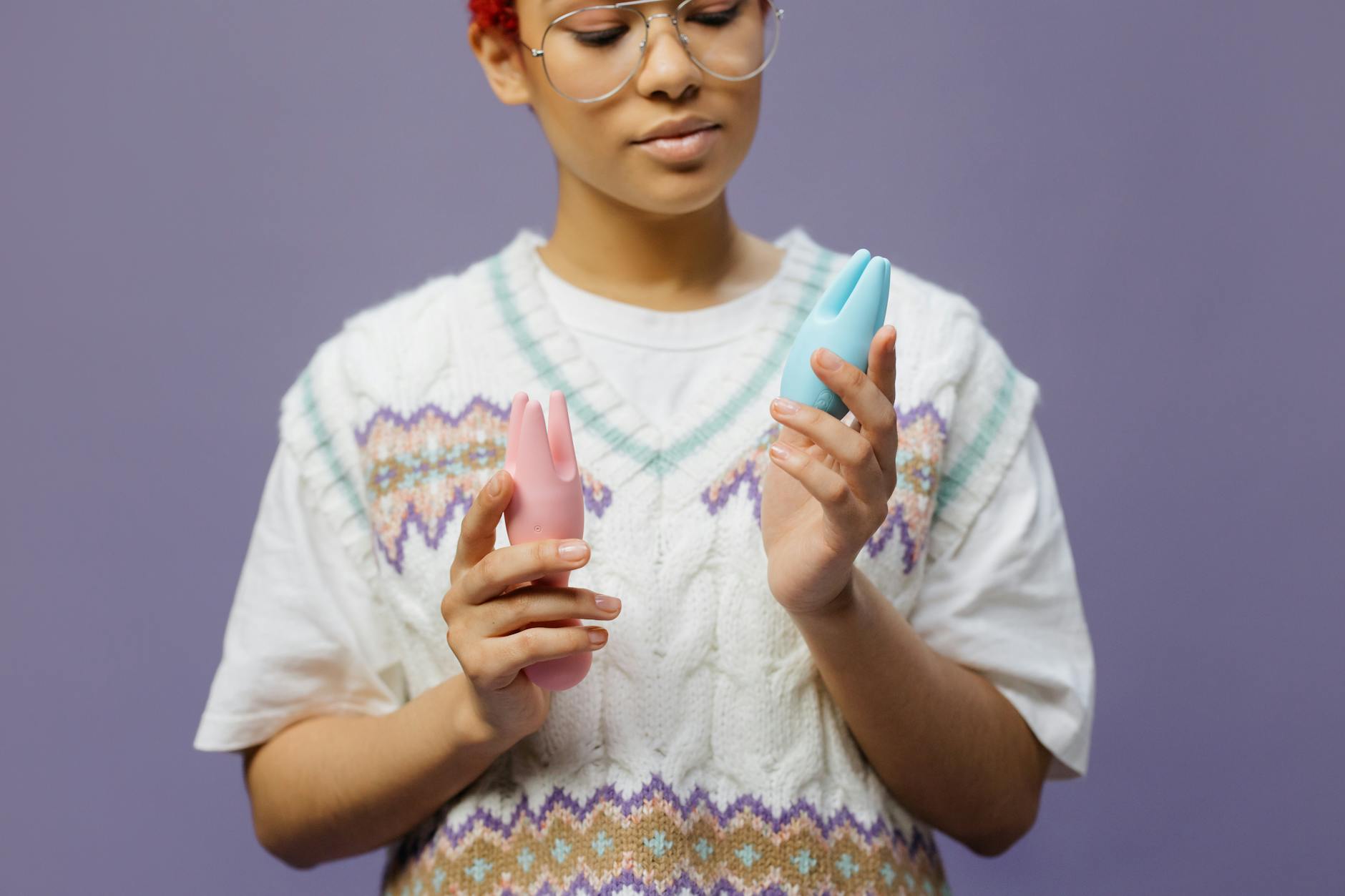
Photo by cottonbro studio on Pexels
How to actually start (the shame-free version)
Here's what I tell people who are rebuilding after depression:
Start solo, and know that's not settling. Partner sex can wait. Right now your job is to relearn what your body is capable of. That's not selfish. That's strategy. You can't communicate what you want if you don't know what you want.
Set a low bar for "success." Success is not orgasm. Success is ten minutes of noticing sensation. That's it. You touched yourself with a tool, you felt something, you stopped. That's a win. Orgasm will come back, but it's not the goal yet.
Start at the lowest setting. The Lem and similar lemon clitoral vibrators have multiple patterns and speeds. Begin at level 1. You're not testing your limits. You're waking up nerve endings. Intensity can come later.
Use it with intention, not obligation. The difference between using a vibrator as a form of self-care and using it as another thing you "should" do is huge. If one evening you sit down with it for fifteen minutes and the only thing that happens is you feel your body for the first time in months, that's medicine. Treat it like that.
Add lube even if you don't think you need it. Depression and antidepressants can both affect natural lubrication. Water-based lube removes friction, which means less irritation and more pleasant sensation. This isn't weakness. It's harm reduction.
The emotional work underneath
Let's be real: depression often wraps itself in shame. You couldn't want sex, so you felt broken. Now you can want it again, but there's baggage attached. Guilt about the months you weren't available to your partner. Weirdness about your own body. The fear that the numbness will come back.
A vibrator can't fix that, but it can give you something to do while you process it. Solo pleasure becomes a form of self-trust. You're literally telling your nervous system: "You're safe. Your body matters. Pleasure is allowed." That sounds abstract until you're actually doing it. Then it's just you and sensation and time.
If you have a partner, this is worth a conversation, but maybe not the "let's schedule sex" conversation yet. More like: "I'm rebuilding my relationship with my body. I might need some solo time for that. It's not about you." Most partners get it. Some are relieved. The ones who aren't might need their own support processing what depression took from both of you.
When to bring a partner back in
You'll know. Usually it's when you can reliably feel something alone and you start thinking, "I wonder if my partner could..." That's your nervous system signaling that you're ready to share the experience.
Start simple. Maybe they're just present while you use your vibrator. Maybe they hold you after. Maybe eventually they use it on you, but only if that feels good. The point is you're introducing pleasure back into partnered space at a pace your body can handle.
One thing that helps: tell your partner what you need before you start. "I want you to use this on me, and I might not come, and that's fine." Permission built in from the start takes pressure off both of you.
What if desire is still flat
Sometimes antidepressants work perfectly for mood but tank libido as a side effect. That's real, and it's worth discussing with your prescriber. There are often adjustments to try: timing of doses, switching medications, adding in other medications that counteract that specific side effect.
But while you're working that out, a lemon vibrator can be useful not because it forces desire, but because it keeps your body in conversation with pleasure. You might not feel "in the mood," but you can feel sensation. Over time, that distinction matters less.
FAQ
How long does it usually take for desire to come back after starting antidepressants?
It varies wildly. Some people feel a shift within weeks. Others take months. There's no timeline, which is frustrating but also means you're not "behind" if you're still rebuilding at three months, six months, or a year. Your brain's neurochemistry is individual. The important thing is that you're noticing any movement at all, even small.
Can using a vibrator make my partner feel replaced?
That depends on how you frame it. If you present it as "this helps me reconnect with my body" rather than "you're not doing it right," most partners see it as a tool that actually helps the relationship. If communication is shaky already, you might benefit from talking to a couples therapist about how to introduce toys without triggering old stuff. But in general, a good partner wants you to feel good. Showing them how you can feel good helps everyone.
What if I have zero sensation down there, even with a vibrator?
First, wait a few more weeks. Sometimes nerve endings wake up on their own timeline. If it's been two months and still nothing, talk to your doctor. Occasionally antidepressants need adjustment, or there's an underlying issue (like pelvic floor tension from anxiety) that needs attention. A physical therapist who specializes in pelvic health can help with that.
Is it normal to feel guilt about wanting pleasure after depression?
Completely normal. Depression often involves shame, and that doesn't just vanish when your brain chemistry stabilizes. You might feel guilty for "finally" wanting things, or for the time you lost, or for needing tools instead of spontaneity. That guilt is part of the healing, not a sign you're doing something wrong. A therapist can help untangle that. So can time, and so can the simple act of choosing pleasure for yourself without apology.
Can lemon vibrators help if I'm still taking antidepressants?
Absolutely. In fact, they're especially useful during that adjustment phase when your mood is better but your sexual response is still finding its footing. The point is to rebuild sensation gradually, without pressure. A clitoral vibrator like The Lem Sucker gives you control over that pace in a way that solo exploration without tools might not.
What if I feel weird about masturbating?
That's also normal, especially if you grew up in an environment that coded masturbation as shameful. But here's the thing: you're not masturbating for fun right now. You're doing it as a form of physical therapy. You're rebuilding your nervous system's ability to feel. That's medicine. Call it that if it helps. Your body is allowed to know pleasure again.
The bottom line
Depression steals desire. Medication brings your mind back. But your body needs time and intention to catch up. A lemon clitoral vibrator isn't a magic fix. It's a tool that lets you practice pleasure on your own terms, at your own pace, without waiting for spontaneous desire that may take months to show up.
You're not broken. You're healing. And healing sexual response after depression is a skill, not a switch. Give yourself permission to learn it slowly.
Want to talk through your specific situation? Reach out at The Lem Sucker. We're here for the messier conversations.