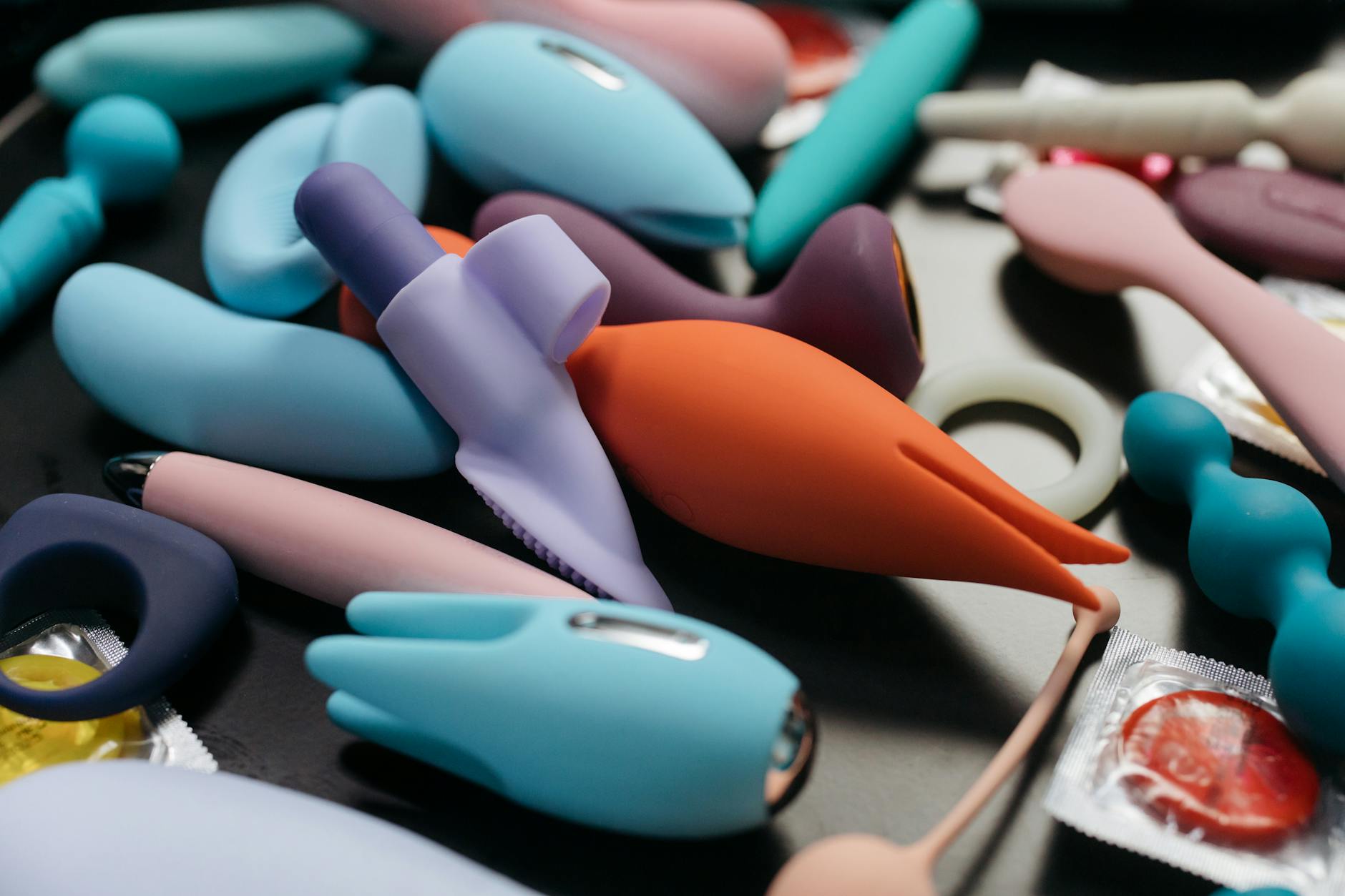
How to Use Lemon Vibrators When Libido Drops After Major Life Stress
Your desire didn't vanish. Your nervous system just went into survival mode. Here's how to coax it back with lemon clitoral vibrators and gentle reconnection.
Let's be real: when life implodes, sex is usually the first thing to go. A job loss, a sick parent, a move, a health scare, a relationship rupture. The bigger the crisis, the more your body pulls inward. You're not being difficult or withholding. Your nervous system has decided that pleasure is a luxury it can't afford right now.
The tricky part is that this shutdown feels total. You don't just lose interest in sex. You lose interest in being touched. You forget what desire felt like. You start to wonder if it's coming back at all.
Here's what I know after twenty years of working with couples in crisis: your libido didn't leave. It went dormant. And there's a meaningful difference. Dormant means it can wake up again. It means the pathways are still there, the sensitivity is still there, the capacity for pleasure is still there. It's just buried under cortisol and fear and the sheer cognitive load of keeping yourself upright.
Three things happen in your body when you're in crisis mode.
First, your nervous system floods with cortisol and adrenaline. These are survival chemicals. They're brilliant at helping you handle emergencies. They're terrible for everything that requires you to relax. Arousal, by definition, requires relaxation. Your brain literally can't process "pleasure" signals while it's screaming "danger." The two states are neurologically incompatible.
Second, blood flow redirects. During stress, blood goes to your large muscles and your brain's threat-detection center. It doesn't go to your genitals. This is why arousal takes longer, why things feel numb, why even direct stimulation doesn't register the way it normally does. You're not less sensitive. Your body is just allocating resources elsewhere.
Third, your prefrontal cortex goes offline. This is the part of your brain that handles desire, anticipation, pleasure-seeking. When you're in threat mode, the limbic system takes over. You're operating from survival, not from want. Sex requires you to think about the future (or at least the next twenty minutes). Stress keeps you locked in the present moment.
The result: you feel nothing. Not even when you try. And trying often makes it worse because it adds performance pressure on top of everything else you're carrying.
When people notice their libido has tanked, they usually swing between two unhelpful extremes. Either they're told to "just relax and it'll come back," which is infuriating when you're in the middle of a crisis. Or they assume it's gone permanently and stop trying altogether.
The actual path is smaller and more practical than both. It's not about forcing pleasure back. It's about sending your nervous system a signal that safety is possible again, even while chaos is still happening.
Lemon vibrators and other clitoral vibrators can do this in a way that partnered sex often can't. Here's why: partnered sex carries weight. It requires reciprocity. It can feel like one more obligation when you're already drowning. A solo practice with a lemon vibrator, or any good clitoral vibrator, is purely for you. It's not about performance or connection right now. It's about reconnecting with your own capacity for sensation.
If you're in acute crisis, skip this section and come back to it when the immediate chaos has settled even slightly. You don't need to force this.
When you're ready, here's the gentlest approach.
Start with the lowest setting. Not as a challenge to go higher, just as a baseline. The Lem vibrator and other lemon sexual toys have different intensity levels for exactly this reason. You're not trying to come. You're trying to notice sensation. That's the whole goal.
Set a timer for five minutes. Not because that's a magic number, but because it removes the question of "how long should I do this for." Just five minutes of paying attention to how your body responds. If five minutes feels like too much, do two. The point is consistency and gentleness, not duration.
Don't have a goal. I mean this seriously. An orgasm would be nice, but it's not the point. The point is that you're telling your nervous system, "We're still here. Pleasure is still possible." You're rebuilding the neural pathway, not running a sprint.
Do this alone. Not because partnered sex is bad, but because you need to rebuild this solo first. Partnered sex carries the pressure of being good for someone else. Right now, you need practice at receiving something just for you.
After you've started with gentle solo practice, the next phase is building a rhythm. This is where stress recovery actually happens.
Your nervous system learns through repetition that safety is possible. It's not about willpower or positive thinking. It's about building new neural pathways that say "even in chaos, pleasure is still available to me." You do this by showing up the same way, at roughly the same time, with the same gentle tool.
I usually recommend three to four times a week if life allows it. Morning is often better than night because you're less cognitively exhausted. Even five or ten minutes counts. The lemon clitoral vibrator works well here because air-suction stimulation doesn't require the same mental focus as other techniques. You can let your mind wander while your body learns that sensation is safe.
As your nervous system starts to settle, you might notice arousal building more quickly. Your body might respond to lower settings. Sensation might start to feel textured instead of numb. These are the signs that your system is coming back online. They're small, but they matter.
This doesn't mean you have to jump straight back to penetrative sex. There's a middle step that works better.
Tell your partner what you're rebuilding. Not "I've been using a vibrator and I want you to know," though you can say that if you want. But more importantly: "My libido crashed under stress and it's coming back slowly. I need us to build it back together without pressure. Can we do that?"
Then introduce your lemon vibrator into partnered touch. Not as a replacement for them, but as part of the conversation. You use it while they're present. You show them what feels good. You let them watch and participate without it being about their performance or their pleasure.
This does a few things. It takes the pressure off them to "fix" your desire. It makes your pleasure visible and collaborative. And it keeps you in the slower, more sustainable approach you've been building solo. Many people find that this phase is actually where desire for partnered sex returns most reliably. Because you're not jumping straight from "completely shut down" to "high-pressure sex." You're moving through the middle ground where your body remembers it's capable of pleasure.
Sometimes stress-induced libido loss has a deeper layer. Unresolved trauma, hormonal imbalance, medication side effects, depression. After about four weeks of consistent gentle practice, if you're noticing absolutely no movement, it's worth talking to someone.
A therapist who works with couples can help you untangle whether this is purely about the stress or whether something else is layered underneath. A doctor can check whether hormones have shifted, whether medication is playing a role, whether depression is present. Sometimes the best thing a lemon vibrator can do is help you recognize that you need other support too.
One of my clients described it as "remembering I'm alive." At first, it's just that her body responded. Then it was that she felt anticipation about her practice time. Then it was that she wanted to touch her partner again.
There's no timeline for this. Sometimes it's weeks. Sometimes it's months. But it almost always comes back if you're gentle with yourself and you don't make it another thing you're failing at.
The Lem vibrator and other lemon sexual toys exist partly for the easy days, the high-desire days, the days when you just want a fantastic orgasm. But they also exist for this. For the slower work of telling your nervous system that even in hard times, sensation and pleasure are still possible. That you're still allowed to feel good.
There's no standard timeline. Some people notice movement within two or three weeks of consistent gentle practice. Others take two or three months. The variables are huge: how acute the stress was, how much support you have, whether depression is involved, what your baseline libido was before the stress. Instead of focusing on the timeline, focus on showing up consistently. That's the variable you actually control.
Both, actually. The parasympathetic activation (the relaxation response) that happens during gentle clitoral stimulation can genuinely help calm your nervous system. It's not a replacement for therapy or other stress management, but the relaxation that comes with slow, pleasurable stimulation does send a genuine nervous system signal that you're safe. Many people find that consistent practice actually reduces their baseline stress levels over time.
Completely normal, and worth naming. You might feel like you're choosing the lemon vibrator over your partner. But you're not. You're rebuilding the capacity for pleasure so that partnered sex can actually be good again. When your nervous system is in crisis mode, pushing toward partnered sex often makes the shutdown deeper. Solo practice with a clitoral vibrator is actually the fastest way back to wanting your partner again.
Not necessarily right away. You could. Some partners find it hot or feel relieved that you're actively working on reconnection. But if you're not ready or if you're worried about how they'll take it, you don't have to. What matters is that you're rebuilding. Whether you share that detail is a separate conversation you can have once you're further along.
Then the goal shifts slightly. Instead of waiting for the stress to disappear (which isn't happening), you're building a practice that works alongside ongoing stress. This might mean slightly lower frequency, or it might mean accepting that some seasons are lower-desire seasons and that's okay. A good lemon sexual toy is still useful here because it requires so little cognitive load. You can show up even when you're exhausted.
It can be, yes. If you're also noticing that nothing feels good anymore (not just sex, but food, activities you love, connection), if you're sleeping too much or too little, if you feel hopeless about the future, then depression is worth exploring with a doctor or therapist. Stress-induced libido loss is normal. Depression layered on top of stress is not something to handle alone.
Your libido didn't vanish because you're broken. It vanished because your body was doing exactly what it's supposed to do in a crisis. Now you're building it back, gently, without pressure, with tools like lemon vibrators that ask nothing of you except that you show up.
If you're struggling with reconnection in your relationship alongside all of this, I'm here. You can reach out at /contact and we can talk through what that might look like. Sometimes talking to someone who understands both the stress and the intimacy piece makes the difference.