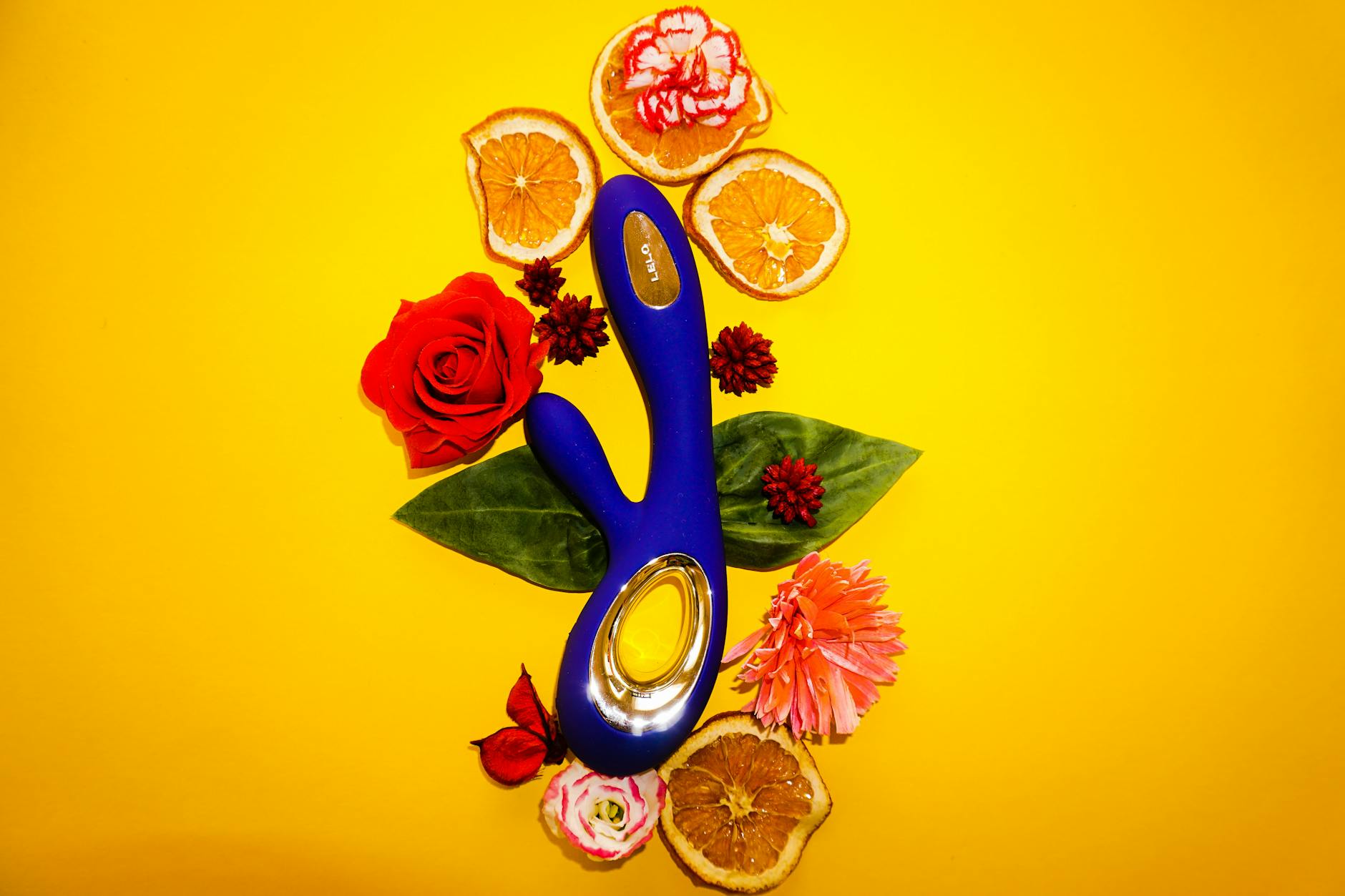
How to Use Lemon Vibrators When Sensation Feels Dull During Partnered Sex
Partnered intimacy can feel less intense than solo sessions. Here's why, and how lemon vibrators restore the spark without replacing what you and your partner already share.
You're with someone you love. The connection is real. But sensation wise, it feels muted. Not wrong, just somehow less electric than when you're alone. You're not broken, and you're not imagining it. This is one of the most common shifts in long-term partnered sex, and it has nothing to do with how much you care about each other.
The contradiction stings because culturally we're told partnered sex should be the peak experience. So when solo pleasure feels sharper, more vivid, or easier to reach, people often assume the relationship is the problem. It isn't. The issue is usually one of three things: pressure, predictability, or physical intensity mismatch. And all three are fixable.
Let me break down what's actually happening in your body and brain.
When you're alone, your nervous system is in what I call "full permission mode." You're not managing someone else's experience. You're not watching their face to see if they're enjoying themselves. You're not negotiating pace or intensity. Your entire bandwidth is focused on your own sensation. This mental clarity alone creates a sharper experience.
With a partner present, even in the best relationships, a portion of your attention splits. You're monitoring. You're adjusting. You're performing, even unconsciously. That cognitive load compresses sensation. Your clitoris isn't actually less sensitive, but your brain is receiving less of its signal because you're filtering it through a social lens.
Then there's physical intensity. Most penises, fingers, or tongues can't replicate the precision and power of a good lemon vibrator like the ones at The Lem Sucker. A human partner, no matter how attentive, has anatomical limits. They get tired. Their rhythm drifts. They can't sustain the exact pressure and pattern that triggers your strongest response. This is biomechanics, not romance.
Your nervous system adapts to repeated stimulation. This is called habituation, and it happens to everyone. After a few years with the same partner, your body has logged thousands of encounters with their particular touch pattern. Your brain stops flagging it as novel. Sensation doesn't disappear. It just becomes background noise instead of a signal you're tracking.
Adding an external stimulus that's unfamiliar to your partner resharpens everything. A lemon vibrator introduces a pattern and intensity your nervous system hasn't habituated to yet. The suction mechanism is fundamentally different from manual stimulation. It's not replacing your partner. It's adding novelty and precision to the experience you're already sharing.
There are a few reasons why lemon clitoral vibrators work particularly well for this specific challenge.
Suction creates sensation your partner cannot replicate. The Lem vibrator uses air-pulse technology, not vibration alone. This means it's not just stimulating your clitoris. It's creating a micro-suction effect that engages deeper nerve endings. Your partner's mouth or fingers can approximate this, but they can't sustain it. Their jaw gets tired. Their hand cramps. A lemon vibrator maintains that exact intensity for as long as you need.
It's a tool, not a threat. This matters psychologically. Many partners worry that introducing a vibrator means they're failing somehow. Frame it differently. You wouldn't ask your partner to do your work presentation or paint your bedroom. Tools exist because they're efficient at their job. A lemon vibrator is efficient at creating a specific sensation. That frees your partner to do what bodies actually do well together: move, touch, and connect.
It restores the pleasure ceiling. When sensation feels dull, orgasms often become shallower or harder to reach. You might plateau at 70% and struggle to get further. Adding a lemon vibrator to partnered sex bumps that ceiling back to 90-100%. This isn't addiction. It's restoration. You're returning to the intensity you knew was possible, just with external help.
Okay, so you know a lemon vibrator might help. Now comes the part that actually matters: the conversation.
Don't lead with the vibrator. Lead with honesty about what you're experiencing. "I've noticed partnered sex feels less intense lately, and I don't think it's about us. I think it's my body adapting to routine" is a true and non-blaming opening.
Then pivot to solution mode, not problem mode. "I've been thinking about ways to restore that sensation, and I'm curious if you'd be open to trying something new together." Notice the "together." This isn't you fixing yourself alone. It's both of you problem-solving.
If your partner is hesitant, the core fear is usually one of three things: they feel replaced, they feel judged, or they're unsure how they'll fit into the experience. Address each directly. "This isn't about me needing something you can't give me. It's about adding a tool that helps me feel more during our time together." "I'm inviting you into this because your presence matters more than the tool." "I want to figure out how we use this as a couple, not how I use it alone."
There's no single right way, but here are the approaches my clients report working best.
During foreplay, before penetration. Use the lemon vibrator solo or with your partner's hands on your body elsewhere. Let them watch. Let them feel your body respond. Once you're highly aroused, they can enter, and you continue using the vibrator. This restores the sensation baseline so partnered penetration or stimulation feels sharper by comparison.
During penetration. The vibrator stays on your clitoris while your partner penetrates. This is the most common integration point. It's not replacing penetration. It's adding external clitoral stimulation that makes the entire experience more intense. Many people report orgasms that are stronger and more satisfying this way.
Partner-controlled. If your partner is interested in a more active role, they can hold and angle the lemon vibrator while you focus on movement or sensation. This puts them in a directing role rather than a passive one, which many couples find erotically interesting.
Post-penetration. After your partner reaches orgasm, they can focus attention on you using the vibrator. No time pressure, no managing their arousal. Just you and the tool finishing strong.
Let me be direct. Sensation dulling during partnered sex is sometimes a sign that emotional intimacy needs attention. Sometimes it isn't. The two questions are separate.
If you feel emotionally distant from your partner and sensation is dull, the vibrator won't fix the core problem. It'll help sex feel less frustrating, but you also need to address the relationship stuff. That might mean therapy, harder conversations, or deliberate reconnection work.
If you feel close to your partner and sensation is just objectively duller due to habituation and physical mismatch, a lemon vibrator is exactly the right move. It's not a band-aid. It's an upgrade.
You can tell the difference by asking yourself: do I want to be with this person? If yes, the tool helps. If no, the tool is just delaying a bigger conversation.
You might be wondering why I'm recommending a lemon clitoral vibrator instead of a traditional vibrator or wand. Three reasons.
First, the suction mechanism means you don't lose sensation over time the way you can with standard vibration. Your body adapts to constant buzzing faster than it adapts to pressure and suction patterns. So a lemon vibrator stays novel longer.
Second, the compact size means it integrates into partnered sex more cleanly. A large wand vibrator takes up space and creates logistical puzzles. The Lem vibrator is small enough that your partner can be close to you, can touch you elsewhere, and can actually feel your body respond without it being awkward.
Third, suction feels qualitatively different from vibration. It's not just faster or stronger. It's a different sensation entirely. This newness is what your nervous system needs to break habituation.
After your first time using a lemon vibrator together, there will be feelings to process.
Your partner might feel relieved ("Oh, that's what works for her"), self-conscious ("I couldn't do that"), curious ("Can I try holding it?"), or jealous ("She looks more into this than into me"). None of these are wrong. They all deserve attention.
Your job is to narrate your experience clearly. "When we added the vibrator, I felt more sensation, which meant I felt more of you." Not "I felt more pleasure in general." Specific. Connected to them.
Many couples find that restoring sexual intensity this way actually deepens their connection. Sex stops being fraught and becomes fun again. And when sex is fun, you touch each other more, you flirt more, and the entire relationship benefits.
No. Dependence implies you can't function without it. You absolutely can have partnered sex without a vibrator. You might prefer not to, the same way you might prefer running shoes to barefoot running. That's preference, not dependence. That said, if you notice you're anxious about partnered sex without the vibrator, that's worth exploring separately.
Most partners actually feel relieved when sensation dulling is addressed. The pressure to be everything at all times is exhausting. A vibrator removes that pressure. Your partner gets to focus on connection instead of performance. Many people report that introducing a lemon vibrator actually improved their confidence, not diminished it.
Ask yourself: do I still want this person? Do I feel close to them emotionally? Do I still enjoy their company outside the bedroom? If those answers are yes, it's habituation. If those answers are no or unclear, the bedroom issue is a symptom of something bigger that needs separate attention.
It means penetration alone isn't enough to restore your sensation ceiling right now. That's not a failing. Penetration was never designed to do everything simultaneously. Adding clitoral stimulation is how most partnered sex actually works biologically. The vibrator just makes it simpler and more precise.
That's real information. You can explore why: is it shame, misunderstanding, or a genuine preference boundary? If it's the first two, education and conversation help. If it's a genuine boundary, you have a choice about whether that works for you long-term. You can also use it solo and mention that you're doing so, which sometimes softens resistance over time.
Absolutely. Solo, you're optimizing purely for your own sensation. Partnered, you're balancing your pleasure with presence and connection. The vibrator in a partnership context is a tool for shared experience, not escape into private sensation. That difference in intention changes the entire experience.
Sensation dulling during partnered sex isn't a sign things are dying. It's a sign your nervous system has adapted, which is what nervous systems do. You haven't lost the capacity for pleasure. You've just landed in a phase where the old stimulus isn't triggering the same response.
Adding a lemon vibrator is one way to restore novelty and intensity. It's not the only way. Changing positions, varying rhythm, adding role play, or taking breaks from partnered sex and reconnecting solo all work too. But if you want a straightforward tool that restores sensation while deepening presence with your partner, a quality lemon clitoral vibrator does exactly that.
Start the conversation. Be honest. Try it together. See what shifts. Most couples find that addressing sensation dulling head-on actually reconnects them, not disconnects them. Because sex, when it feels good, becomes something you both want to keep doing.