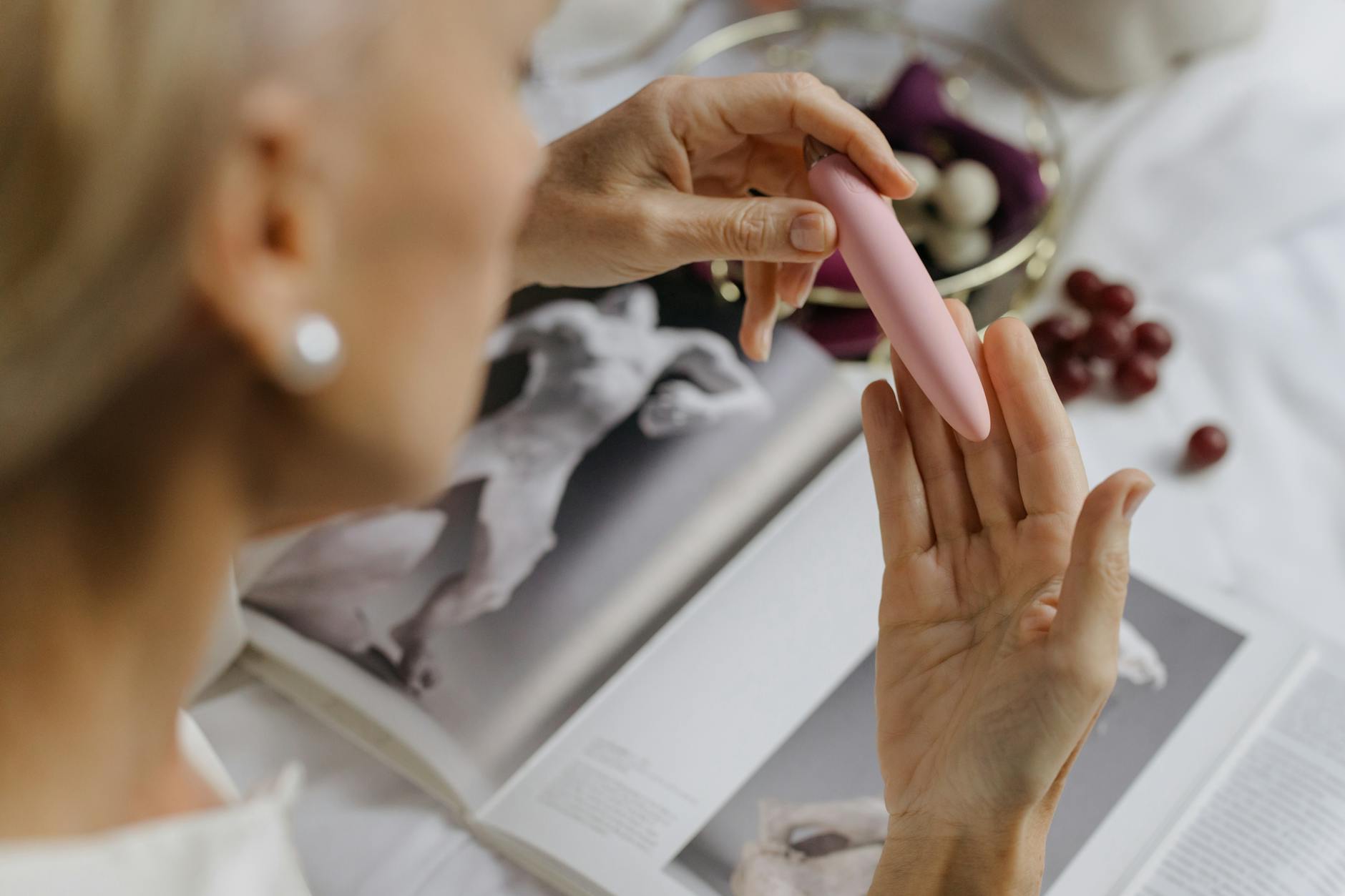
How to Use Lemon Vibrators When You Want Deeper Connection With Your Partner
Introducing a clitoral vibrator together isn't about fixing anything. It's about creating a conversation your bodies can have that your words sometimes can't.
Couples come in after years of good sex feeling a little rote. Not bad, just. Familiar. They're looking for something that will crack that open without requiring an awkward conversation or, honestly, a ton of work. What they don't realize is that a clitoral vibrator like the Lem isn't a Band-Aid on the problem. It's actually a different kind of conversation altogether.
When you bring a vibrator into partnered sex intentionally, you're not saying "I need this because you're not enough." You're saying "I want to show you something about how my body works that I've maybe kept private." That shift in framing changes everything about how the tool lands.
Here's the neuroscience part that matters. When your nervous system is flooded with sensation, your thinking brain quiets down. The part of you that's performing or self-monitoring or worrying about how you look just. Stops. Your partner gets to see you in that state. Not performing, not controlling, just receiving pleasure. That's intimacy most couples never actually experience together.
Most people assume vulnerability means talking about feelings. Sometimes it does. But there's a fiercer kind of vulnerability in letting someone witness your body in its fullest pleasure response. In trusting them with that. That's the connection piece that keeps couples coming back.
When you use a lemon clitoral vibrator with a partner, you're also solving a mechanical problem that silently erodes connection. Many women and people with vulvas need sustained, focused clitoral stimulation to orgasm reliably. Without it, you're spending the whole encounter managing your own arousal instead of being present with your partner. A vibrator fixes that, which means your entire nervous system can actually be in the room instead of running background calculations.
The best time to bring this up is not during sex and not in the bedroom. It's over coffee or while you're doing something else. "Hey, I've been thinking about trying a vibrator together. I'm curious what you think." Full stop. Listen to what comes up.
Common responses and what they usually mean: If they say "I thought I was enough," what they're often hearing is "you're not satisfying me." That's a real concern to address. Clarify: "It's not about replacing you. It's about me exploring something I've never really played with. And I want to do it with you because I trust you." That matters.
If they say "Okay, but which one," you're probably fine. If they go quiet or change the subject, there's something underneath. Don't push it that day. Circle back in a week. Sometimes resistance is just unfamiliarity. Sometimes it's something deeper worth exploring.
The conversation is not a one-time thing. You're not getting permission. You're opening a negotiation that should include: What are you curious about? What would feel good? What are your boundaries? What turns you on about the idea? Those last two questions often get skipped and they're essential.
You don't have to go straight to partnered penetrative sex with a vibrator. In fact, I usually recommend against it.
Start with mutual masturbation. Sit facing each other, you use the vibrator on yourself while they touch themselves or watch. There's zero pressure to perform for each other. You're just... existing together in pleasure. That's radical for a lot of couples. It solves the vulnerability problem at a lower temperature and builds trust before you fold the vibrator into the more complex choreography of partnered sex.
After a few times doing that, you might explore them using the vibrator on you while you're inside each other, or during oral sex, or after penetration as foreplay toward your orgasm. The shape of it depends on what feels good for both of you. There's no script.
If you're using something like the Lem with its suction technology, you've got options. The vibration pattern won't get in the way of penetration the way some toys do. You can have it running during sex itself or use it before or after as part of the extended experience. The point is you're experimenting, not following a manual.
Where do you keep it? How do you store it? Who initiates using it? These seem boring but they're not.
If the vibrator is hidden in a nightstand, bringing it out can feel performative. If it's out on the shelf, it can feel clinical. Find a middle ground that feels neutral to both of you. Some couples keep theirs in a small drawer under the bed. Others in a dedicated spot in the closet. The ritual of getting it should feel natural, not jarring.
Who asks for it? You both should feel comfortable asking. That's the bigger conversation. If only one person initiates, you've missed the point. The goal is that it becomes part of your shared toolkit, not your tool that your partner tolerates.
Emotionally, watch for: resentment (someone feels like it's being used as a fix for a broken thing instead of as an addition to a good thing), performance pressure (feeling like you have to orgasm now because you have tools), or deflation (if one person gets way more out of it than the other, there can be subtle hurt underneath). These aren't dealbreakers. They're signals that the conversation isn't done.
This is where a lot of couples actually find their rhythm.
If you're the partner with a vulva, you can hold the vibrator on your clitoris while your partner is inside you. Or they can hold it while inside you. Or you can use it before they enter and then set it aside. The Lem works particularly well here because the suction sensation doesn't feel like just another vibration. It's distinct. Many people describe it as feeling more like hands.
If your partner is struggling with that psychologically ("I feel like I'm not enough"), circle back to the reframe: this isn't about adequacy. This is about you getting to experience your full pleasure while you're connected. It's a gift you're both giving to your shared experience, not a referendum on their performance.
Timing matters. Some people need the vibrator early in the encounter to build arousal. Others need it at the very end to cross the finish line. Some need it for a few seconds and then it becomes distracting. You're learning your own body in front of a witness. That takes a few tries.
Here's what happens after couples get comfortable with this: they report feeling less performance pressure, not more. Because the focus shifts from "can I orgasm" to "what does this feel like" to "what am I learning about my partner's body and what they actually want."
They also report that the conversations get better. When you can ask for clitoral stimulation during sex, you've just practiced asking for what you actually need. That skill transfers everywhere.
Most importantly, they feel more seen. Your partner is watching you receive pleasure. Not the performance version of pleasure. The real thing. That's worth the initial awkwardness of the setup conversation.
Introducing a lemon clitoral vibrator isn't about fixing your sex life. It's about deepening the conversation your bodies are already having. If you're using it as a couple, you're not running from connection. You're running toward it.
No. Your body doesn't rewire to need a vibrator. Your nervous system just gets to experience different sensation. Some days you'll want it, some days you won't. It's the same as how you might love a massage one day and prefer touch another day. The only time dependency becomes real is if you're using a vibrator every single time and nothing else, and even then, most people bounce back to sensitivity within a few weeks of switching it up. Variety is actually your friend here.
That's information. It's worth exploring what's underneath. Is it anxiety? Unfamiliarity? A belief about what sex should be? A different arousal style? Once you understand it, you have choices. You can use it solo and keep that separate. You can wait and revisit it later when they might feel differently. You can look for a compromise that feels good to both of you. But forcing it won't deepen connection. Respecting their boundary will.
Direct conversation, not ambush. "I've been curious about exploring this, and I want to do it with you because I trust you. It's not about you not being enough. It's about me getting to experience something new, and I want you there for it." Then listen. If there's genuine hurt, address it. But often what feels like hurt is actually curiosity or nervousness masquerading as defensiveness.
Absolutely. In fact, this is one of the most common reasons couples bring a vibrator into their sex life. The pressure to orgasm with a partner watching can actually make it harder. A vibrator can take that pressure off by giving your body what it specifically needs to orgasm. Once that's happening reliably, many people find the psychological block lifts over time. You're not using it forever. You're using it until you don't need to.
Then you haven't found your rhythm yet. Try different positions, different moments in the encounter, different people holding it. Some couples find that during missionary it gets in the way, but during you-on-top or from behind it works perfectly. Some people love it during penetration and others prefer it as foreplay. You're troubleshooting, not failing. Most couples need a few tries to find what actually works for their bodies and their dynamic.
As often as it feels good. There's no prescription. Some couples use one every time. Some use it once a week. Some use it and then don't for a few months and then circle back. The point isn't frequency. The point is that it's available and you're both comfortable with it. Pressure to use it a certain amount is just another performance standard. Let it be flexible.
Using a lemon clitoral vibrator with your partner isn't a shortcut to connection. But it's also not neutral. It's an invitation to be more present, more honest, and more willing to ask for what you actually need. That's the connection. The vibrator is just the vehicle.
If you're thinking about bringing one into your relationship, the conversation matters more than the tool. Start there. Listen. Be curious about what your partner is actually feeling underneath the words. Then experiment together. The depth you're looking for usually shows up in the willingness to be vulnerable, not in the vibration pattern.
Ready to explore? Learn more about how to find the right tool for your body by checking out our buying guide, or reach out if you have questions about getting started as a couple. Your pleasure, and your partnership, deserve that attention.