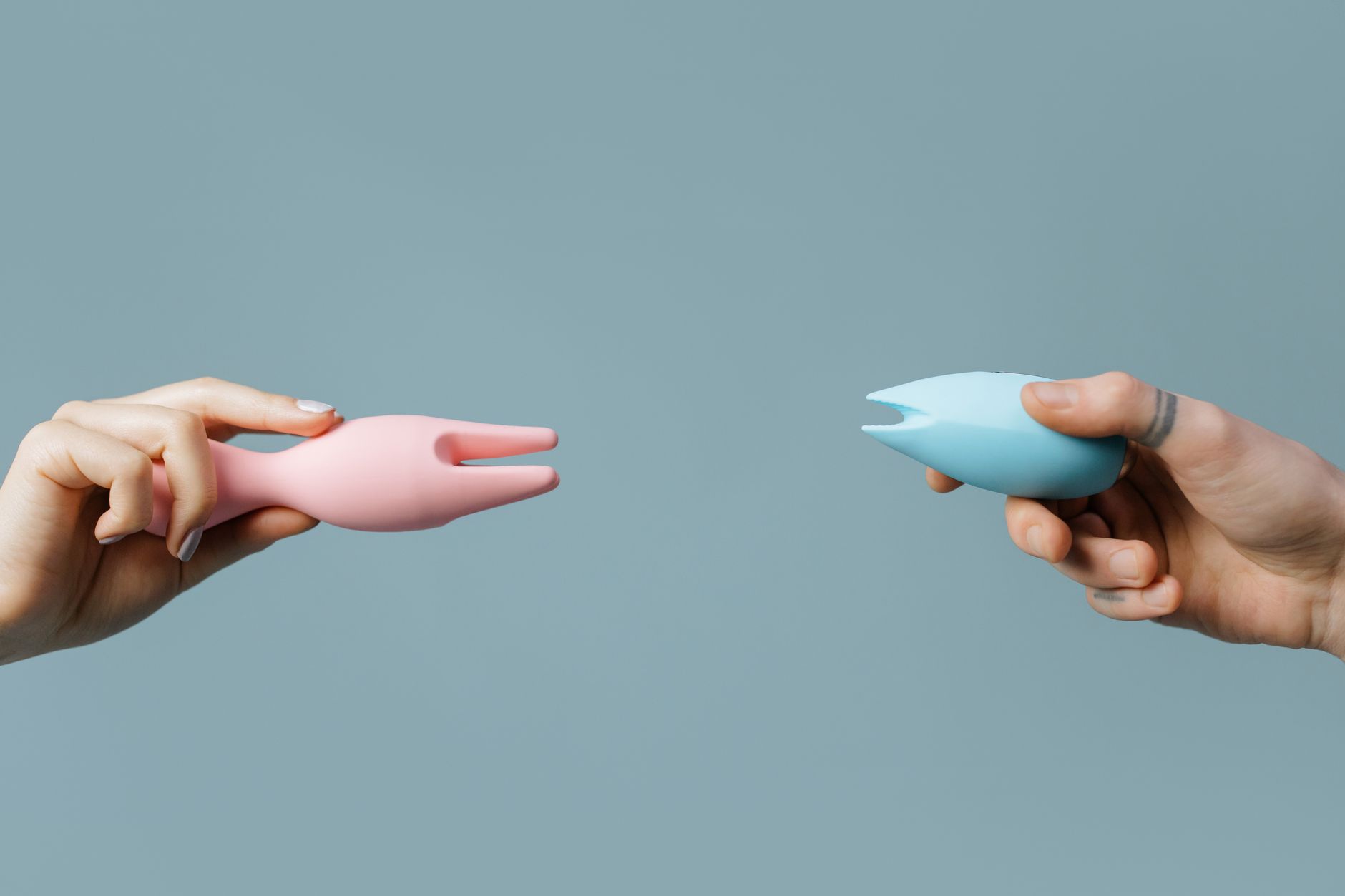
The thing nobody tells you about bringing toys into a relationship
Most couples approach a vibrator like it's a confession. One person quietly suggests it, the other feels either rejected or criticized, and suddenly what could be fun becomes awkward and fraught. Here's what I know after working with hundreds of couples: the problem is never the toy. It's the framing.
When you position a lemon vibrator or any clitoral vibrator as a solution to a "problem," your partner hears blame. When you frame it as an expansion of pleasure you both already have, it becomes an invitation instead.
Why clitoral stimulation changes partnered sex
Let's start with the physiology. During partnered penetration, most people with vulvas don't orgasm from penetration alone. This isn't dysfunction. It's anatomy. The clitoris sits outside the vaginal canal, and the angle and depth of most partnered sex doesn't create the direct stimulation needed for most people to come.
So what happens? Either the person receiving stimulation doesn't orgasm, or they're mentally working so hard to climax that they miss the emotional connection happening right there. Both rob the experience of depth.
A lemon vibrator changes this. Air-suction stimulation during partnered sex means arousal builds faster, orgasms arrive more reliably, and the person being touched can actually stay present instead of performing or problem-solving. That presence is what deepens intimacy.
How to have the conversation before you introduce it
Timing matters. This conversation should NOT happen in the bedroom, in the middle of sex, or when either of you is tired or stressed. Pick a calm moment, ideally when you're both fed and awake.
Start with what you want, not what's missing. "I've been thinking about ways we could have more fun in bed together," is radically different from "I need help coming." The second sentence triggers defensiveness. The first opens possibility.
Then be specific about why. "I read that clitoral vibrators help people stay more present during sex because orgasms happen faster, and I'm curious what that would feel like for us," is concrete and collaborative. You're not saying your partner is failing you. You're saying you want to explore something together.
If your partner seems hesitant, ask what's underneath it. Often it's fear that the vibrator is a replacement for them, or worry that they're not enough. That's the conversation to have. Not "why don't you want this," but "I care about you. Let's figure out what matters to you here."
The first time using a lemon vibrator together
Keep it low-pressure. This is exploration, not performance. Start outside the bedroom context entirely if that helps. Some couples find it easier to talk about toys while cooking, or to look at options together online without any sexual expectation attached.
When you do use it, go slow. If you're receiving stimulation, tell your partner what feels good. Not "faster" or "harder," but "I like it when you do that pattern on the left side," or "lighter touch right now." This gives your partner a role and direction, which actually makes them feel more essential, not less.
If you're the partner not directly receiving the vibration, you still have a job. You're touching them in other places, watching their response, adjusting rhythm or pressure based on what you're seeing. You're present. That presence is the point.
Start with a low intensity setting. The Lem and other quality lemon vibrators have multiple patterns and speeds for a reason. Begin at setting 1 or 2 and let sensation build. There's no reason to jump to maximum intensity on a first exploration.
Common friction points (and how to move through them)
"I feel left out." This is real, and it's worth naming directly. If your partner feels excluded, it means the introduction didn't work. Go back to the conversation. You're not replacing them with the toy. You're adding something that lets you both relax and enjoy sex more. Some partners find it genuinely hot to watch and feel their partner come easily. Give them permission to feel however they feel.
**"This feels clinical." ** Vibrators can feel weird at first because they're different from what you're used to. Give it three or four times before deciding it doesn't work. Pleasure builds with familiarity. What feels strange on day one often feels amazing by week two.
"We only use it sometimes, then my partner expects it every time." Set expectations out loud. "Let's try this a few times and see if we both like it," is clearer than assuming. If one of you loves the vibrator and the other is neutral, that's fine. Use it sometimes. Don't use it sometimes. Partnered sex works with and without toys.
How lemon vibrators specifically help with connection
The suction sensation from air-pulse toys like the Lem is quieter and more intimate than a traditional vibrator. You can still talk during sex, which means you can maintain eye contact, hear each other breathe, stay emotionally connected while pleasure is happening. That's huge.
The speed at which orgasm arrives with a quality clitoral vibrator also changes the dynamic. When arousal builds over twenty minutes of foreplay instead of forty, you're both still present and engaged at the finish. Longer foreplay can create presence too, but it can also lead to fatigue or distraction. A vibrator lets you get to climax while everyone's still connected.
And honestly, when one partner can reliably orgasm, the pressure lifts off the whole experience. The person receiving doesn't feel broken. The person giving doesn't feel inadequate. You're just two people having sex and both getting to feel really good.
If your partner initiates this conversation with you
There's a good chance your partner is nervous. They might frame it poorly. They might stumble over their words or accidentally say something that lands wrong. Your job in that moment is to listen for the underlying wish, not the clumsy phrasing. They want to feel good. They want you to feel good. They want more connection. That's worth showing up for.
If you're uncertain, ask questions instead of shutting it down. "Tell me more about why you're interested in this," gives them space to explain. "I want to understand what you're looking for," signals that you're open and curious, even if you're nervous.
Then use the framework above. Pick a low-pressure first time. Stay present. Pay attention to what's working. Adjust as you go.
The deeper point underneath all of this
Inviting a lemon vibrator into partnered sex is really an invitation to know each other better. You're saying, "I want to feel good, and I want you there with me." You're also saying, "I'm curious about what we could experience together." That combination of self-advocacy and openness is what deepens intimacy over time.
The toy is just a tool. The real work is the conversation, the vulnerability, the willingness to explore something new and potentially awkward together. That's the stuff that bonds people.
FAQ
Can using a lemon vibrator make my partner feel insecure?
It can if the introduction is framed wrong. If you position the vibrator as a solution to a problem with your partner ("you're too slow" or "you don't give me enough stimulation"), they'll feel blamed. If you frame it as something you want to explore together to increase pleasure for both of you, it's an invitation. The difference matters enormously.
Should I ask permission before bringing up toys, or should I just suggest it?
Just suggest it. But do it thoughtfully. Pick a calm moment outside the bedroom. Lead with what you want (more connection, more fun, more exploration) rather than what's missing. Then listen to what your partner says. If they seem uncomfortable, slow down. This isn't a negotiation you need to win. It's a conversation you need to have well.
How do I know if my partner is actually into it or just going along with me?
Watch their body and listen to their words. If they're genuinely into it, you'll hear "yes, that feels good," or "let's try this again," or "I liked when you did that." If they're going along with it, you'll hear "I don't know" a lot, or "whatever you want," or notice they seem withdrawn. Check in directly. "Are you enjoying this?" is a totally fair question, and the answer tells you everything.
What if I want to use a lemon vibrator with my partner, but we've never talked about toys before?
Start the conversation now. Don't wait for the bedroom. Say something like, "I've been curious about exploring more together, and I came across some information about clitoral vibrators. I'd love to talk through what you think about trying that together." Then listen. You might be surprised by their response.
Does using a vibrator mean we won't have sex without it anymore?
Not at all. Many couples use vibrators sometimes and not other times. Some couples love them. Some try them once and never again. Use it when you both want to. Don't use it when you don't. Your sex life can hold both experiences. That's actually healthier than making any single approach mandatory.
How do I introduce this if my partner is the one with lower libido?
This is different territory. If your partner has lower desire overall, a vibrator won't fix that. That's a separate conversation about what's underneath the lower libido. Stress, disconnection, hormones, medication, or relationship issues need to be addressed first. Once you've talked about those things and want to experiment sexually, a quality clitoral vibrator can make the experience more satisfying. But it's not a substitute for addressing the root cause of low desire.
Resources and next steps
If you want to deepen partnership and communication around pleasure, how to use lemon vibrators when partners have different pleasure timelines covers the rhythm mismatch piece specifically. Or, if you're starting fresh with a new partner and want tools for exploring together, how to use lemon vibrators to explore partnered pleasure together walks through that from the ground up.
The Lem and other quality lemon vibrators are built for this kind of partnered play because the suction sensation keeps you both in the moment. If you're ready to talk through what might work for your specific situation, reach out. I'm here to help.