
Let's talk about the sensitivity problem that nobody names
You want to come. Your body's wired for it. But the second a vibrator touches your clitoris, it feels less like pleasure and more like someone's trying to sand the skin off. You turn it on the lowest setting. Still too much. You try patterns. Nope. So you give up, or you white-knuckle through it, or you convince yourself you're just "not a vibrator person."
Here's the thing: you're not broken, and vibrators aren't the problem. The problem is that most vibrators were designed by people who don't actually understand clitoral sensitivity. A lemon clitoral vibrator like the Lem works differently because it uses air-pulse suction instead of direct buzzing. That's a meaningful distinction when your clitoris feels raw or reactive.
Why clitoral sensitivity happens (and it's more common than you think)
Clitoral sensitivity comes from a few different sources, and knowing which one applies to you changes your strategy.
Nerve density overload. Your clitoris has roughly 8,000 nerve endings packed into a space the size of a pea. Traditional vibrators send stimulation directly into that nerve cluster at high frequency. For some people, that's exactly what they want. For others, it's sensory assault.
Hormonal shifts. If you're on hormonal birth control, approaching menopause, or dealing with post-pregnancy changes, estrogen and progesterone affect how sensitive your nerve endings are. This can make direct vibration feel sharp rather than pleasurable.
Tissue thinning or irritation. Inflammation from infection, dermatitis, or just friction from ongoing stimulation can make even gentle touch feel uncomfortable. You need a break or a different approach.
Psychological overlay. Sometimes the sensitivity is partly physical and partly mental. You've had bad experiences, or you're tense, or you're worried it's going to hurt. That anticipation makes everything feel more intense.
The good news: none of these mean you can't have orgasms. They just mean you need to adjust your technique.
How lemon vibrators approach sensitivity differently
The Lem and other suction-based clitoral vibrators work through air-pulse technology instead of direct vibration. Instead of the buzz hitting your clitoris head-on, the suction creates a rhythmic pulse around the tissue. It feels gentler, less jarring, and many people find it less overwhelming even at higher settings.
Why does this matter? A few reasons.
First, suction stimulates a broader area of nerve tissue rather than concentrating intensity in one spot. That distribution makes the sensation feel more diffuse and easier to tolerate.
Second, you can control the intensity through your own positioning. Pressing more firmly against the device increases sensation. Pulling back slightly decreases it. With a traditional vibrator, your options are usually limited to power settings.
Third, the patterns on air-pulse devices tend to feel more rhythmic and less chaotic. Your nervous system finds rhythm soothing. Chaos feels threatening. This is why a pulse at setting 2 on the Lem often feels more enjoyable than setting 3 on a standard vibrator, even though the numbers suggest they should be comparable.
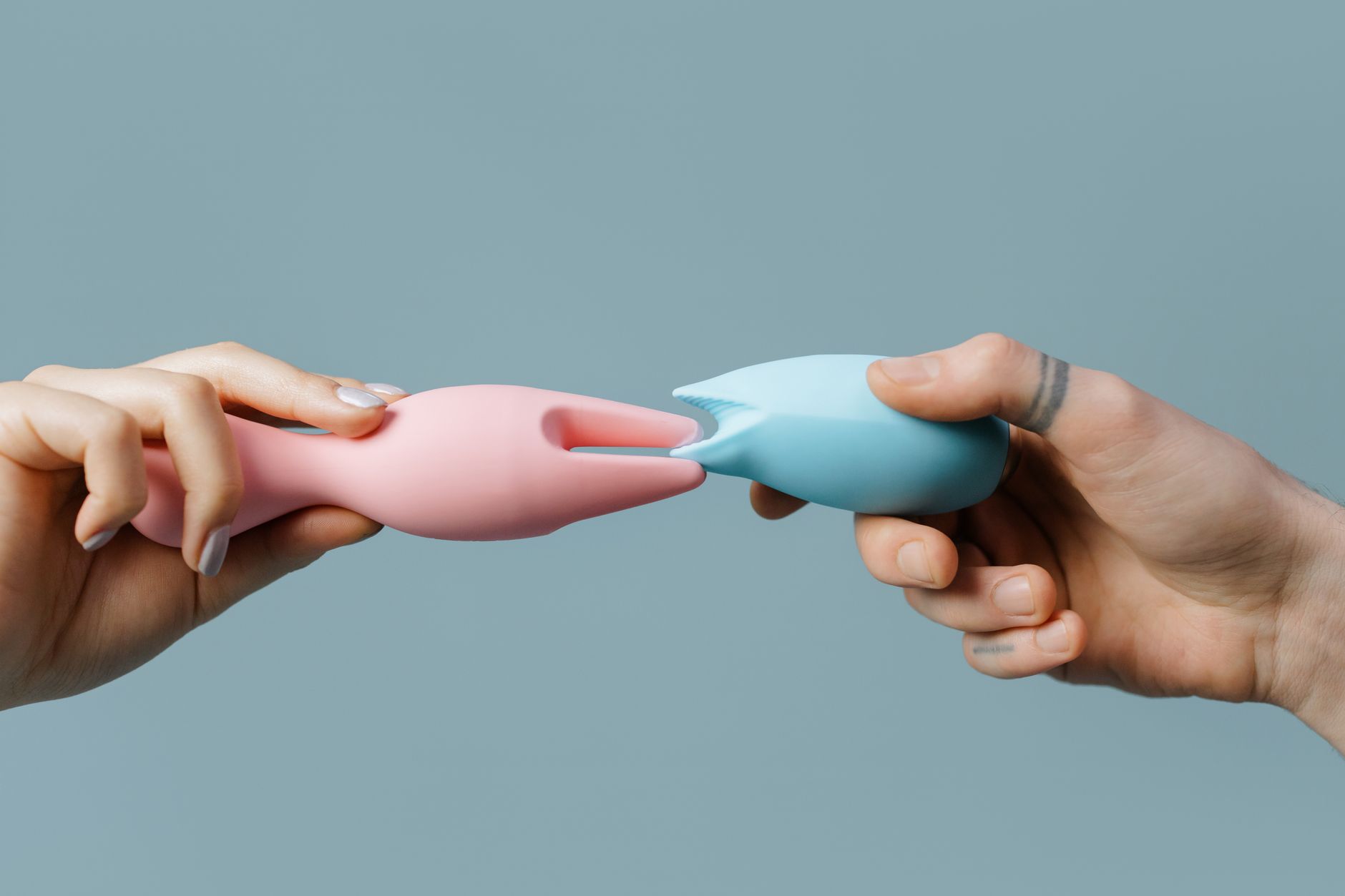
Photo by cottonbro studio on Pexels
The setup matters more than you think
Here's where most people go wrong: they turn on the lemon vibrator and get straight to work. If your clitoris is sensitive, you need a warm-up.
Start without the vibrator entirely. Spend 5-10 minutes using your hand or having your partner touch you (if you're with someone). This wakes up your nerve endings gradually and gets blood flowing to the area. Your clitoris will swell slightly, which sounds weird, but it's actually your friend because swollen tissue is more resilient.
Once you're already aroused, place the Lem against your clitoris at the lowest setting without turning it on yet. Let the weight and warmth of the device do the work. Notice how that feels. Some people find that the physical contact alone is enough to trigger arousal.
Then turn it on. Start at setting 1. If it feels manageable, stay there for at least 2-3 minutes. Let your nervous system adjust. Many orgasms happen when you give your body permission to be slow. You're not racing toward a finish line.
Pattern selection is a game changer
Most lemon vibrators have multiple patterns beyond just "on." These matter.
Pulse patterns feel gentler than continuous buzz. If your device has a steady pulse at low intensity, that's often your best entry point. The rhythm helps your body anticipate and settle into the sensation rather than bracing against an unpredictable wave.
If you're struggling with any pattern, you don't have to accept it as the "normal" way to use the toy. Many people find that alternating between two settings works better than sticking to one. Use setting 2 for 30 seconds, drop back to setting 1 for 30 seconds, repeat. The variation keeps your nerve endings engaged without overwhelming them.
Some people swear by the slowest patterns available. Others find that jumping to a faster pattern once they're well-aroused actually feels better. The only way to know is to experiment, and that requires patience.
Positioning changes everything
Direct contact straight on the clitoral glans is not the only option, and often not the best one if you're sensitive.
Try the side approach: angle the lemon vibrator so it's stimulating the side of your clitoris rather than dead-center. This gives you the benefit of vibration without the intensity of direct contact.
Or try the hood approach: stimulate through the clitoral hood rather than with the hood pulled back. There's still a layer of skin between the device and your nerve endings, which creates a gentler sensation. It's like the difference between touching someone's arm with a full hand versus poking it with one finger.
You can also hold the Lem slightly away from your body, letting the sensation reach you indirectly. Some people describe this as more of an ambient stimulation, and it's often enough to build toward an orgasm if you give it time.
When to take a break (and why it helps)
If your clitoris starts to feel numb or sore during a session, stop. This is important.
There's a window where vibration feels good, and then there's a point where your nerve endings essentially check out. Pushing past that creates soreness that can last hours or even days and makes future sessions harder. You're not failing. You're just hitting your nerve capacity for that day.
Take a 5-10 minute break. Switch to manual stimulation with your hand. Let your clitoris desensitize slightly. Then come back if you want. Or just call it and try again tomorrow.
This is one of the reasons how you approach orgasms matters more than how often you have them. If you're forcing it every time, you're working against your body instead of with it.
The role of lubrication and other tools
For some people with clitoral sensitivity, a small amount of water-based lubricant between your clitoris and the toy reduces friction and makes the sensation feel smoother rather than grabby.
For others, lubrication makes it worse because it reduces the boundary between you and the device. You have to find your own answer on this one.
Same with other tools: some people use clitoral numbing creams before vibrator use, which temporarily reduces sensitivity so you can enjoy the orgasm without the pain. That's a valid choice if soreness is severe. Just know that you're trading sensation for comfort, so you might need more intensity to reach the finish.
When sensitivity is part of a bigger picture
If your clitoral sensitivity is severe, or if it's paired with vulvodynia, dermatitis, or frequent UTIs, you might benefit from talking to a gynecologist before diving deeper into vibrator use. These conditions are real and treatable, and sometimes the best path to pleasure runs through medical support first.
If the sensitivity is tied to trauma or anxiety around touch, talking to a therapist who specializes in sexuality can help you and a partner rebuild confidence in your body. Emotional intimacy and physical sensation are deeply connected, and sometimes the clitoris mirrors what's happening in your mind.
The patience paradox
Here's what I've seen work for dozens of people with clitoral sensitivity: the ones who stop trying to force an orgasm on a timeline are the ones who actually get there.
You want to use a lemon vibrator. You have a clitoris that feels reactive. The fix is slow, gentle, strategic pressure with a device designed for nuance. Start low. Stay there. Adjust positioning. Pay attention to what feels good rather than what "should" feel good.
Your orgasm is worth the time.
People also ask
Can clitoral sensitivity go away on its own?
Sometimes. If the sensitivity is tied to irritation or inflammation, it often resolves once the irritant is removed and you give the tissue time to heal. If it's hormonal, shifts in your cycle or changes in birth control might make it better or worse. If it's structural or nerve-related, it's typically something you'll manage long-term rather than cure. The good news: managing doesn't mean avoiding pleasure. It means adapting your approach.
Is it normal to feel pain with vibrator use?
Some discomfort is common when you're first adjusting to vibration. Sharp pain is not. If you feel a stinging, burning, or raw sensation, that's your clitoris telling you the stimulation is too intense for right now. Stop, give yourself a break, and try a lower setting or different approach next time. Pain isn't the goal. If it persists or gets worse, see a gynecologist.
Can I use a lemon vibrator if I have extremely sensitive skin?
Yes, actually. Because lemon vibrators use suction instead of direct buzz, many people with sensitive skin find them easier to tolerate than traditional vibrators. The key is starting slow and adjusting positioning. If you have active irritation or an infection, wait until it's healed before using any toy.
How long should each session last if I'm sensitive?
There's no magic number. Some sessions are 5 minutes, some are 20. Pay attention to when your clitoris feels good and when it starts to feel overworked. Quality matters way more than duration. One really good orgasm from a 10-minute session beats a frustrated 30 minutes of forcing it.
Should I use condoms or barriers with a lemon vibrator?
If you're using it solo, no. If you're sharing it with a partner who has a different body, condoms on the device are a good idea for hygiene and to prevent STI transmission. If you're sensitive to certain materials, the barrier can also help. Use water-based lubricant to help the condom stay in place.
What if I've never had an orgasm and I'm sensitive?
A lemon clitoral vibrator can be a great tool to learn what your body is capable of, but sensitivity means you might need even more patience than average. Give yourself permission to explore without pressure. Some people's first orgasm comes from a specific pattern, positioning, or combination of mental focus and physical touch. You're not discovering a flaw. You're discovering your particular map.
Clitoral sensitivity isn't a life sentence of numb or painful sex. It's information about what your body needs. A lemon vibrator, used thoughtfully, can be the bridge between "I want pleasure" and "I can actually feel it." Start low. Stay curious. Adjust as you go. Your orgasm is waiting on the other side of patience.