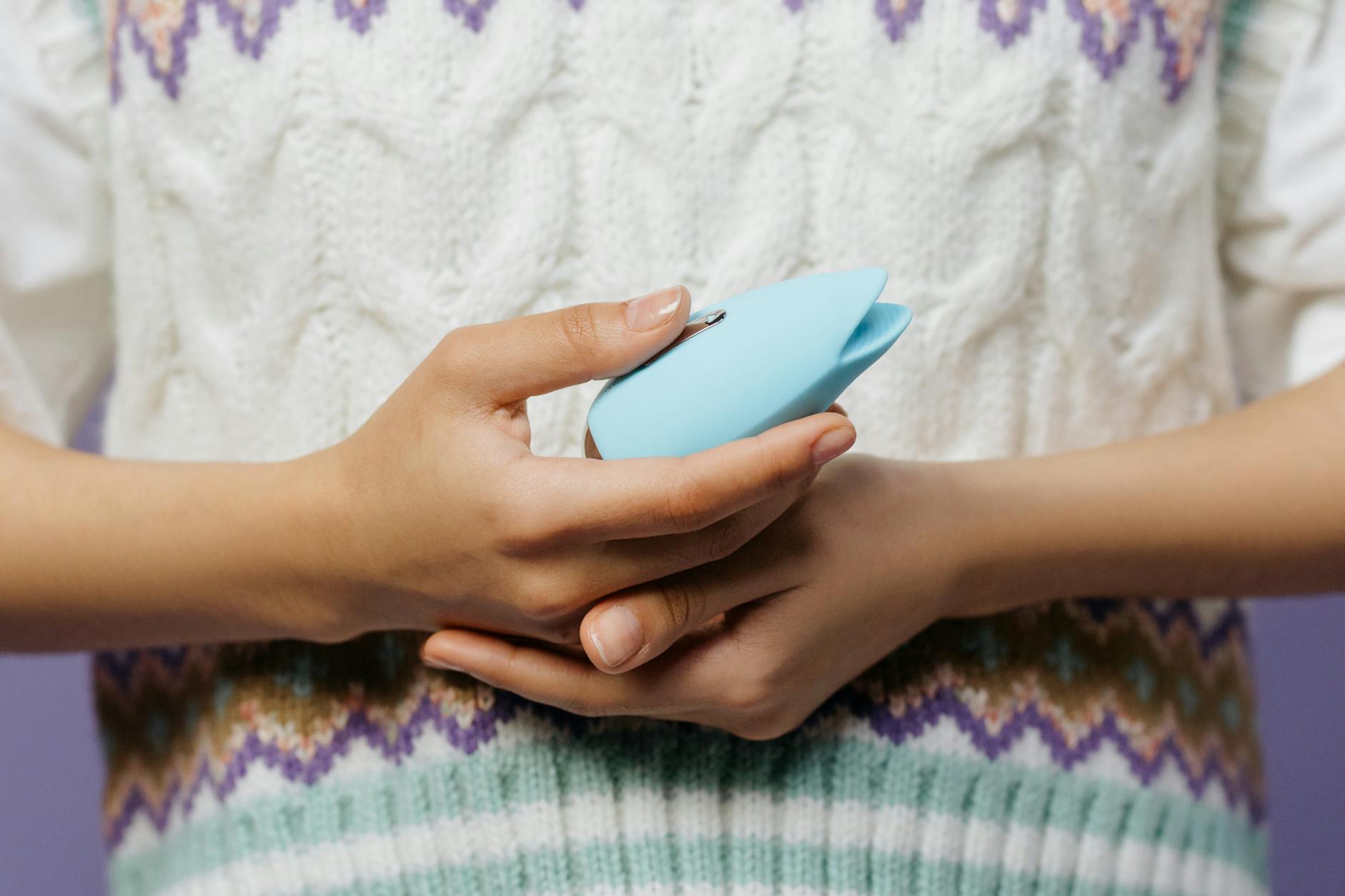
How to Use Lemon Vibrators When You Want Stronger Orgasms but Fear Losing Sensitivity
The worry that clitoral vibrators will permanently numb you is understandable. Here's what actually happens, what doesn't, and how to get the best orgasms of your life without the tradeoff.
Here's the thing: almost everyone who's thinking about trying a lemon clitoral vibrator for the first time has the same worry hiding in the back of their mind. If I use a vibrator, will my body stop responding to touch? Will I lose sensitivity? Will I need it forever to orgasm?
Let me start by naming what's real: if you use a lemon vibrator on high setting for 45 minutes straight, your clitoris will temporarily feel less responsive. That's called sensory adaptation, and it's not unique to vibrators. Your skin does this with temperature (a hot bath feels hotter at first, then your body adjusts). Your ears do this with background noise. Your nose does this with your own perfume.
It's not damage. It's not numbness. It's your nervous system saying, "I've received this stimulus. I'm now tuning it out so I can notice new information."
But here's where the myth breaks down: that temporary adaptation is the opposite of permanent insensitivity. Once you stop using the vibrator, your sensitivity returns within minutes to hours. The clitoral nerves that respond to stimulation haven't been damaged or desensitized. They've just temporarily stopped paying attention to that specific input.
The real science is weirder and better than the myth.
When you use a lemon clitoral vibrator consistently, you're not training your body to need more stimulation. You're training your brain to recognize a different type of stimulation as pleasurable. Think of it like how your palate expands when you eat different cuisines. You don't "lose" the ability to enjoy a simple salad just because you've had Thai food.
Here's what happens neurologically. Your clitoris has about 8,000 nerve endings. They're organized to respond to different kinds of touch: pressure, vibration, temperature, texture. Most people have spent their entire sexual lives stimulating the pressure-and-texture pathways. They work, they're reliable, they're familiar.
When you introduce a lemon sucker or another clitoral vibrator, you're engaging the vibration-sensitive nerves that have been there the whole time, basically unused. You're not replacing your old pathways. You're adding new ones. Most people report that they become more sensitive to all touch, not less, because they've expanded the neural real estate available for pleasure.
I have clients who've used lemon vibrators regularly for years and still have intense orgasms with a partner's hand. The vibrator didn't replace that pleasure. It coexists with it.
The one scenario where people do report temporary numbness is when they use a vibrator at the highest setting for extended periods without breaks. But that's not a sensitivity problem. That's an intensity management problem. It's the same reason you wouldn't spend an hour pinching your own arm. Not because pinching damages the nerve, but because any one stimulus at maximum intensity, applied continuously, will fatigue that nerve temporarily.
The fix is embarrassingly simple: use lower settings, take breaks, and vary the sensation. A lemon clitoral vibrator like the Lem has multiple intensity levels for a reason. Most people who report "losing sensitivity" actually started on setting five out of seven and stayed there. They didn't give their nervous system a chance to integrate the new sensation gradually.
Think of it like progressive training. You wouldn't start a workout at maximum effort. You'd warm up, build, recover. The same applies here.
Start on the lowest setting and stay there until it feels boring. Boredom is your signal to turn it up, not lack of sensation. For the Lem, that means starting on pattern one. Spend sessions here. Let your body learn what this feels like. This shouldn't take weeks. Usually three to five sessions is enough.
Build variety into your routine. Don't use the same pattern at the same intensity every time. Alternate between the Lem's different patterns. Mix in manual touch without the vibrator. Use the vibrator for only part of a session, then finish with your hand. This variation trains your nervous system to stay engaged and responsive across different types of stimulation.
Never use a vibrator to the point of pain or extreme fatigue. You're looking for intense pleasure, not numbness. If you finish a session and your clitoris feels sore or is tingling unusually, that's your nervous system saying you went too hard. Next time, stop five minutes earlier. Your pleasure will actually be stronger if you leave wanting more, not if you exhaust the sensation.
As a therapist who works with couples navigating intimacy, I see this all the time: the people who get the best results with lemon vibrators are the ones who treat them like an expanding language for pleasure, not a replacement for existing pleasure. The vibrator isn't the goal. The expanded range of sensation is.
Here's what research and thousands of client conversations have taught me: people who use clitoral vibrators regularly tend to report increased sensitivity and pleasure over time, not decreased. Why? Because you're not dulling your nerves. You're training your brain to recognize and respond to more types of stimulation. You're literally expanding your capacity for pleasure.
Many people report that after using a lemon sucker consistently, they orgasm faster, more intensely, and more frequently overall, even without the vibrator present. That's not because they're dependent on it. That's because they've trained their nervous system to recognize pleasure signals more readily. The pathways are open. The volume is turned up.
I've worked with countless people who were terrified of vibrators, tried one anyway (often a lemon clitoral vibrator), and six months later said, "I can't believe I was scared of this. My sex life is a thousand times better." Not because the vibrator is magic. But because they expanded what their body is capable of feeling.
If you're experiencing persistent numbness or loss of sensation in your clitoris that doesn't recover after stopping stimulation, that's worth mentioning to a healthcare provider. But it's almost never caused by vibrator use. Real persistent numbness usually points to other things: hormonal shifts (especially drops in testosterone or estrogen), certain medications like SSRIs or blood pressure drugs, neuropathy from diabetes, or sometimes compression from cycling or sitting.
Use of a lemon vibrator or any clitoral vibrator is not on that list. The temporary, reversible adaptation that happens during or immediately after vibrator use is not numbness. It's just your nervous system doing its job.
Here's what I want to land clearly: you can use a lemon clitoral vibrator. You can use it regularly. You can have the strongest, most consistent orgasms of your life. And you will not lose your sensitivity. You will not become dependent. You will not damage yourself.
What will happen is that you'll expand your understanding of what your body is capable of. You'll probably orgasm faster and more easily. You might discover that pleasure is available to you in ways you didn't know existed. Your existing pathways for pleasure don't disappear. They just become part of a larger landscape.
The fear of losing sensitivity is real, but it's not based on biology. It's based on old stories about women's bodies, stories that positioned pleasure as fragile and finite. Your body isn't fragile. Your sensitivity isn't a limited resource that vibrator use depletes. It's an expanding capacity that grows the more you explore it.
If you've been holding back from trying a lem vibrator because of this worry, I want to invite you to set it down. Your body wants to feel good. That wanting doesn't damage you. It sustains you.
No. Temporary sensory adaptation during or immediately after vibrator use is not the same as permanent numbness. Your clitoral nerves will fully recover their sensitivity within minutes to hours after you stop using the vibrator. Persistent numbness is almost never caused by vibrator use and usually points to hormonal shifts, medications, or underlying health factors worth discussing with a healthcare provider.
This is a common fear, and it's not supported by evidence. People don't become dependent on vibrators in the way they might become dependent on, say, a specific antidepressant or stimulant. Your nervous system adapts to new sensations, but it doesn't replace existing pleasure pathways. Most people who use lemon vibrators consistently report they're actually more responsive to manual touch, not less. If you notice you're only able to orgasm with a vibrator, that's usually about preference, not nerve damage.
Yes, as long as you're varying intensity and pattern, taking occasional breaks, and not pushing through discomfort. Think of it like exercise. Daily movement is healthy. But if you do the exact same maximum-intensity workout every single day, you risk overuse injury. Same principle applies. The Lem has seven different patterns for a reason. Use them. Mix it up. Your clitoris will thank you by staying responsive and engaged.
That's sensory adaptation, and it's temporary and normal. Your nervous system is recognizing a repeated stimulus and dialing down its response temporarily so it can notice new input. It's not damage. Stop using the vibrator, wait a few minutes to an hour, and full sensation returns. If you want to minimize this feeling, use lower intensities, vary your patterns, take breaks during sessions, and don't use the same stimulus for more than 20-30 minutes at a time.
Often yes, but not because the vibrator is magic. What lemon vibrators do is engage nerve pathways that might not have been regularly stimulated before. If you've struggled with orgasm or weak orgasms, it's usually because those neural pathways haven't been trained or explored thoroughly. A clitoral vibrator, used thoughtfully and with variety, can help you discover sensation and pleasure you didn't know was available. That said, if pleasure issues persist despite vibrator use, talking to a therapist or sex educator can help you explore what else might be at play.
Not really. The sensory adaptation process is the same whether you're using a lemon sucker, a wand, a rabbit, or any other vibrator. What matters more is how you use it: intensity level, duration, variety of patterns, and recovery time between sessions. The Lem's suction technology provides a different sensation than a traditional vibrator, which is actually beneficial for expanding your sensory range. But all vibrators, used responsibly, should enhance sensitivity over time, not diminish it.
Your fear of losing sensitivity makes sense. You've heard the warnings, the cautionary tales, the stories about becoming "addicted" to vibrators. But the science doesn't back up those fears. What the science does show is that thoughtful, varied vibrator use expands your capacity for pleasure and sensation, not contracts it.
If you want stronger orgasms and you've been holding back from trying a lemon clitoral vibrator because you're worried about the consequences, this is your permission slip. Your body is resilient. Your sensitivity is expandable. And your pleasure matters more than the old myths about it.
Want to talk through what might work best for your specific situation? Reach out to our team at The Lem Sucker. We're here to help you explore pleasure without fear.