The disconnect that feels normal until it doesn't
Most couples don't wake up one day and realize they've drifted. It happens in increments. A stressful week becomes a stressful month. Sex drops from twice a week to once. Then once a month. Then you're not sure when it last happened, and asking feels awkward because now there's history to it. Now there's weight.
The irony is that physical reconnection often feels harder the longer you've been apart. You're not just restarting sex. You're restarting vulnerability with someone who's become a roommate. That's the real barrier, and no toy solves emotional distance alone. But the right tool can break the ice in a way that talking, alone, sometimes can't.
Why this matters more than you think
Research on long-term couples shows that physical touch (sex, specifically) is one of the fastest ways to rebuild emotional closeness. Not because sex is magic. Because it requires presence, communication, and a kind of surrender that reminds you both why you chose each other in the first place. The problem is getting back into the water when you've been dry for months.
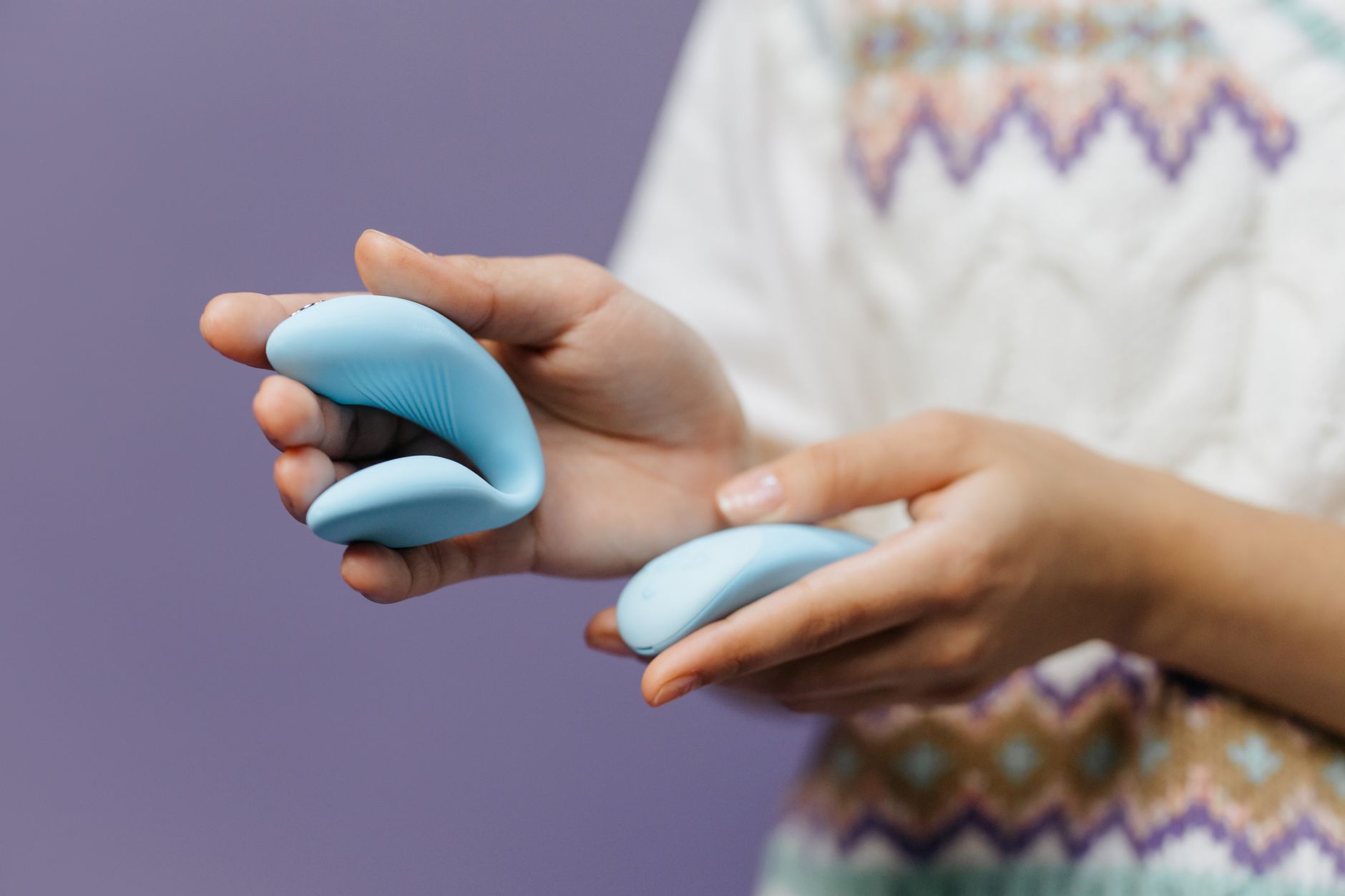
Lemon vibrators, and specifically lemon clitoral vibrators like those from The Lem Sucker, work here because they shift the dynamic. Instead of "we should have sex," the conversation becomes "I want to feel good, and I'd like you here while that happens." That's permission, not obligation. And it changes everything.
Starting the conversation without making it heavier
Let's be honest. "We need to have sex again" is a conversation that often ends before it starts. It feels like a performance review. A referendum on the relationship.
Instead, try something like: "I've been thinking about trying something new. I'm curious if you'd want to be involved." Or even simpler: "There's something I want to explore, and it would feel better with you." You're not diagnosing the relationship. You're expressing desire. That's already a step.
The Lem Sucker product line gives you a concrete thing to reference. You're not vague. You're not asking them to generate ideas out of thin air. You're saying "I want to use this, and I want you to see what I experience." Specificity lowers shame. It raises clarity.
What lemon sexual toys actually do in this context
Lemon clitoral vibrators work through suction and rhythm, which means they're fundamentally different from penetrative sex. That's the point. When couples have been apart, jumping straight back to partnered sex can feel like too much. It's high stakes. Everyone's nervous. Expectations are loaded.
Using a lemon vibrator together is lower stakes. You're not performing for each other yet. You're exploring sensation. You're learning what feels good right now, in this body, in this moment. Your partner gets to watch, touch, be present. They get to remember why they find you attractive. And you get to feel good without the pressure of reciprocating on a timeline.
This is especially useful if one of you has experienced numbness or disconnection from pleasure. As you rebuild, you don't have to wonder "Is this working?" You can literally show them. You can describe the sensation. You can guide them. That builds confidence on both sides.
The practical setup that actually works
Here's what I recommend to couples trying this:
First, pick a time when you're both relatively relaxed. Not at 11 p.m. when you're both exhausted. Not Saturday morning when there's a full day of errands. Pick a time when you can actually be present. This matters more than the setting.
Second, set a really specific intention. Not "let's try to get close." Maybe "I want to feel pleasure, and I want you to hold me while I do that." Or "I want to see what feels good and then tell you about it." Give yourselves permission to not have sex afterward. You're training your brains that touch and pleasure are possible between you again. That's the win.
Third, start with the lower settings on the lemon vibrator. Even if you normally go harder, begin at a gentler intensity. Your body is relearning sensitivity in this context. You're also relearning presence with your partner. Slower means more room to feel and communicate.
What changes when your partner is involved
When you use a lemon clitoral vibrator alone, it's about sensation and release. When your partner is present, it becomes about trust. About being watched. About them seeing you feel good.
For some people, that's harder than for others. If you've been distant for a long time, being that exposed can feel vulnerable in ways you've forgotten. That's normal. You might not have an orgasm. You might feel awkward. That's fine. You're rebuilding a habit, not reaching a performance target.
Your partner, meanwhile, gets to show up differently. They're not the "performer." They're the witness. They can touch your leg, your back, your face. They can ask what feels good. They can be curious instead of goal-oriented. For a lot of couples, that shift in role actually rebuilds attraction faster than going straight back to traditional sex.
The conversation after
This is where it gets real. After you've felt pleasure with your partner present, you have something concrete to talk about. "That felt good when you touched my arm." Or "I wasn't sure about the highest setting, but once we slowed down, it shifted." These are actual observations, not vague feelings.
Many couples find that this conversation naturally leads to curiosity about other things. Maybe they want to be more involved next time. Maybe you want to try it together differently. Maybe you realize you want to use lemon sexual toys more regularly. The point is, you're problem-solving together, not alone.
If the conversation stalls, that's information too. It might mean you need to address the emotional distance more directly. It might mean one of you is still resistant to reconnection. That's worth knowing. And it's a better place to start a bigger conversation than "we never have sex anymore."
When this approach doesn't land
I want to be clear about something. Lemon vibrators are a tool for couples who both want reconnection but don't quite know how to restart. They're not a fix for a relationship where one person has checked out entirely. They're not a solution to infidelity, untreated addiction, or ongoing contempt.
If your partner is resistant even to the idea of you feeling pleasure, that's a sign you might need a relationship coach or therapist before you need a vibrator. Same if the disconnection started because of something bigger neither of you has addressed.
But if you're both willing and just stuck on the "how," lemon clitoral vibrators genuinely do open a door. They give you permission to be sexual in a way that feels safer than jumping straight back into what you used to do. They make pleasure visible and discussable. And they remind both of you that desire is still there. Sometimes it's just sleeping.
FAQ: Reconnecting with lemon vibrators
What if my partner feels threatened by me using a vibrator?
That's common. Many partners worry that a vibrator means they're not enough. The conversation to have is simple: "I want to feel good, and I also want you here. Those aren't in competition." You might also explain that lemon vibrators work through suction and rhythm in a way that's different from penetration. You're not replacing them. You're adding something. If they're still resistant after that conversation, the resistance might be pointing to a bigger insecurity worth exploring with a therapist.
How do I know if we're actually reconnecting or just going through the motions?
Reconnection has small markers. You laugh more during the process. You maintain eye contact. You ask each other questions. You touch each other outside of the sexual context afterward. You text about it. You think about it the next day. If you're not seeing those, you might be going through the motions, and it's worth pausing to ask why. Sometimes couples need to address the underlying issue first.
Can lemon vibrators help if one of us has trauma around sex?
Yes, but carefully. If either of you has experienced trauma, starting with a sex therapist or trauma-informed coach is wise. They can help you build safety in smaller ways first. A lemon vibrator might eventually fit into that picture, but it shouldn't be the starting point. Move slowly. Consent at every stage. Stop whenever something doesn't feel right.
What if we try this and nothing changes?
That's possible. Reconnection requires willingness from both people, and sometimes one person is further along in the process than the other. If nothing shifts after a few attempts, it might be time to bring in a relationship coach who can help you both understand what the real barrier is. Often, the sexual disconnection is a symptom of something deeper that needs attention.
How often should we use a lemon vibrator while reconnecting?
There's no rule. Some couples find that once a week works. Others prefer to build up to it. The point is consistency and presence, not frequency. If you're forcing it, it loses the point. If you're both looking forward to it, that's the sign you're onto something.
Is it okay if reconnection feels awkward at first?
Completely. You're both relearning how to be vulnerable together. Awkwardness is part of that. Some of the best reconnections I've witnessed started with nervous laughter. Give yourselves grace. You're building something, not perfecting something.
The bridge back
Disconnection feels permanent until you're on the other side of it. Couples who drift often believe the drift is permanent. It's not. It's just a habit that's become comfortable because neither of you knows how to break it without it feeling forced.
Lemon vibrators work because they're specific, they're tactile, and they give you permission to prioritize pleasure without the weight of a full sexual performance. They're a bridge. Not the destination, but the way back to one.
If you and your partner are stuck in that drift, you don't need a major overhaul. You need an opening. Sometimes that's a conversation. Sometimes it's a moment of vulnerability. Sometimes it's a tool that makes pleasure visible again. Whatever it takes to remind each other that you still want this. That matters.